TipsUpdated 4 min read
Website Security: Seven Essentials
Published by Samsiani
You have just finished your website, have not had time to install the tools it needs, or have forgotten that its password is something like ‘1234’. Still, the website works. Everything is fine, right?
Not necessarily. Website security needs attention. Without suitable protection, your site is exposed to malicious attacks by people and automated bots. These can severely damage or destroy it. The good news is that you can improve its security.
Here are the basic tools and practices every website needs to strengthen its protection.
Use HTTPS
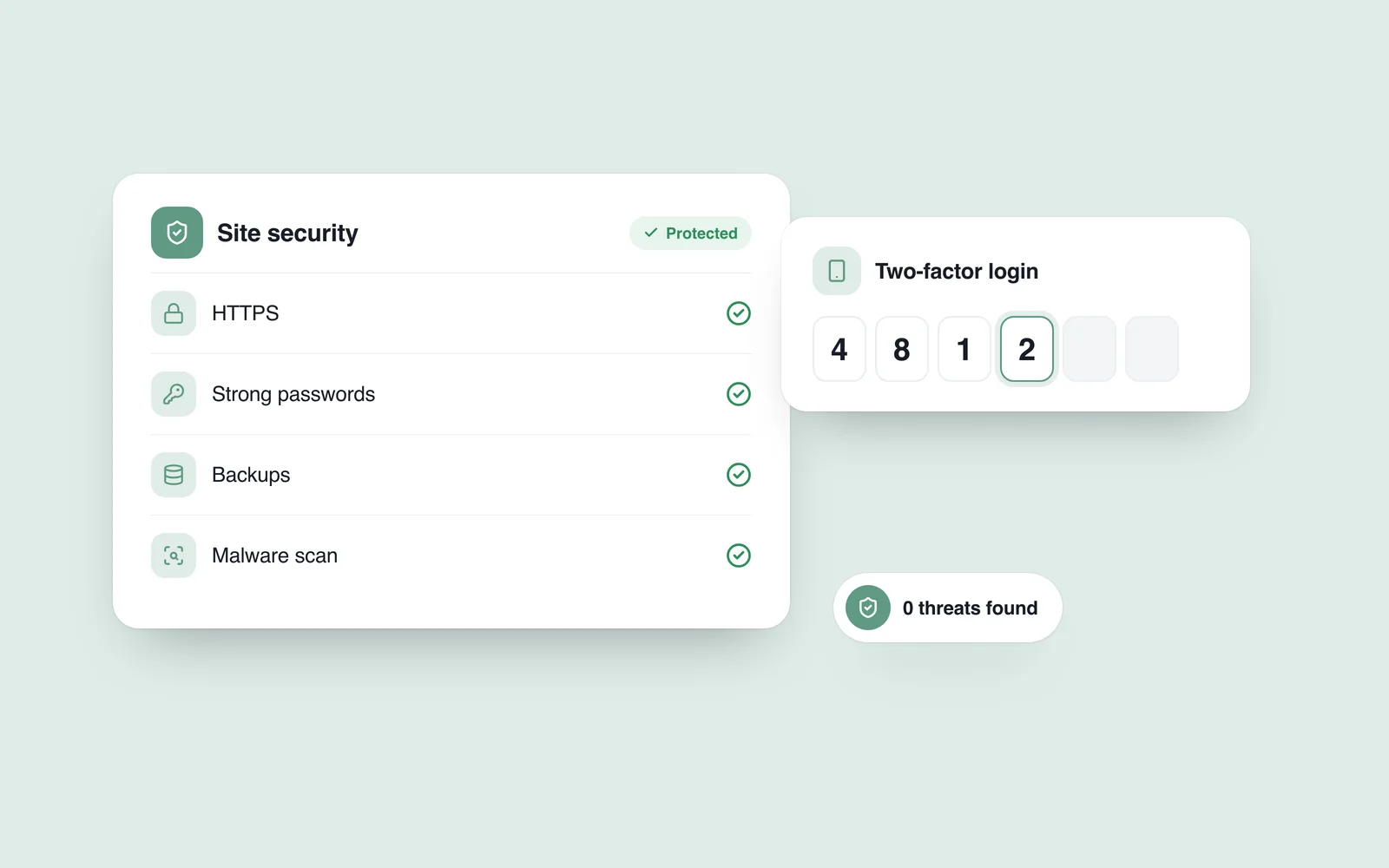
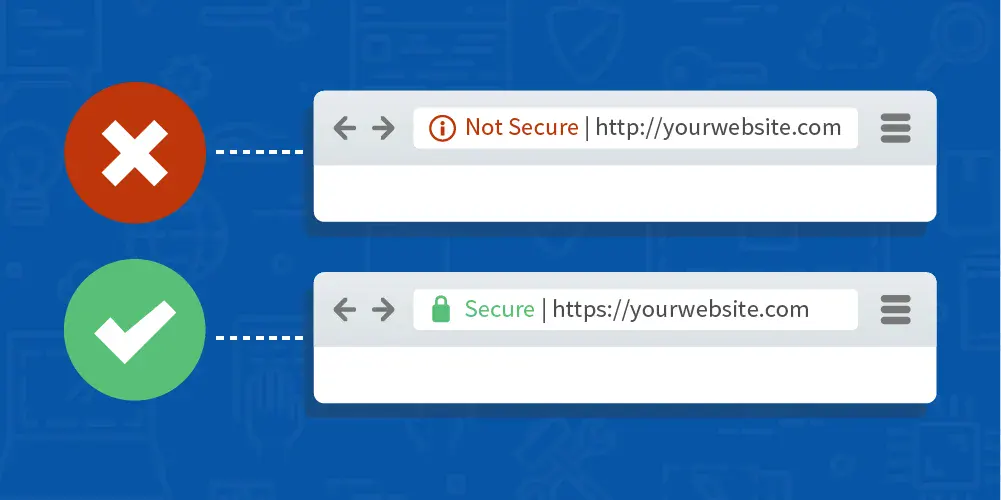
One of the first and most important steps in protecting a website is to use HTTPS. Unlike standard HTTP, HTTPS encrypts the connection through which website data is transmitted.
As well as protecting the connection, HTTPS can help attract and retain visitors. It contributes to your performance in Google Search, where HTTPS is a positive ranking signal.
Visitors can also see that their connection is secure, helping them feel more comfortable staying on your website and submitting personal or financial information.
Use strong passwords and two-factor authentication
Passwords are another important part of web security. The last thing you want is an attacker guessing yours and gaining access. That would be like leaving your house key on the porch for anyone to use.
Create passwords that are difficult to guess and consider when they need changing. Also consider two-factor authentication (2FA). With 2FA, a password is followed by another identity check, such as a phone call or text message, before access is granted.
Two-factor authentication reduces the risk of unauthorised account access. Use it alongside strong passwords and regular software updates. Encourage everyone in your company who can access the website to use strong passwords and 2FA.
Back up your website
Unfortunately, even good defences can sometimes be breached. If that happens, you need to be ready. Keeping a backup of your website is one of the best ways to prepare.
Many tools can help create backups. This step matters because an attacker who gains access may destroy the site. A suitable backup lets you restore it to an earlier, undamaged state, often through a straightforward restore process.
Check and scan regularly
Malware is one of the common ways attackers and bots compromise websites. There are many ways to introduce malicious software, so scan your website files regularly for infections.
Various platforms and plugins can scan your website. We recommend making use of these tools.
Carry out penetration tests
Another useful practice is penetration testing: simulating attacks to find vulnerabilities in a system.
Think of your website as a castle. You would watch for intruders, but you would also look for weak points in the walls. If you found a hole someone could climb through, you would repair it immediately.
Penetration testing does the same for your website's defences. It simulates attempts to break in and, when it finds a route, identifies the weakness so that it can be fixed.
You can use online tools for automated penetration testing or ask a specialist team to carry it out.
Install website security plugins
There is a wide choice of security plugins. Their functions vary: some monitor malware, others test for vulnerabilities, and others help detect or block malicious activity.
Before using a security plugin, make sure that the tool itself is trustworthy, comes from an authorised source, is widely used and has a good reputation in its field.
Offer a bug bounty
You can also offer a reward to people who discover vulnerabilities in your website. This involves publicly setting out a benefit for those who find and report a security flaw.
Such programmes often attract professional bug hunters: independent security specialists who carry out their own tests and report vulnerabilities they find.
This approach can uncover weaknesses you have missed by giving researchers an incentive to identify them.
Your website's security is your responsibility
Remember that you are ultimately responsible for your website's security. Even without specialist skills, you need to check its protection regularly and seek professional help when necessary. Explore our website maintenance and security support. The damage caused by an insecure website can be substantial.