Development4 min read
Who Needs a Website, and Why?
Published by Samsiani
Website creation: where did it begin?
At the beginning of this century, creating a website seemed like a large, impressive and almost mysterious undertaking. Even a basic website signalled that a company was established and modern. Developers charged substantial fees; with so few specialists available, clients often had little choice.
By the end of the century's second decade, technology was advancing rapidly and businesses were trying to keep pace. New spaces and opportunities were opening up, with the internet among the most important.
Imagine a day without social networks, email, search engines or entertainment videos. Such a day rarely happens unless we deliberately arrange it — perhaps by heading to the countryside to take a break from everything online.
‘Build a website’, ‘I need a site’, ‘website development’…
We hear these phrases around us, or say them ourselves. But do we really understand what a website can do, the benefits of owning one, the challenges involved, or even why we need a website?
Imagine running a business. Naturally, you want it to become known, increase sales and earn more revenue. You want the business to prosper.
You print banners, improve your office's appearance, tell people about your work and proudly present your products or services.
Why do all this? You want people to recognise your business, understand what makes it different and see why they might choose it over competitors. You put effort into making the business visible because that visibility matters.
Ask yourself what you would do to make your business successful and well known. Run an advertising campaign? Certainly.
You might create television or radio advertisements, open a shop with an attractive frontage, display street banners or organise promotions. The options depend on your imagination and resources.
What role can the internet play?
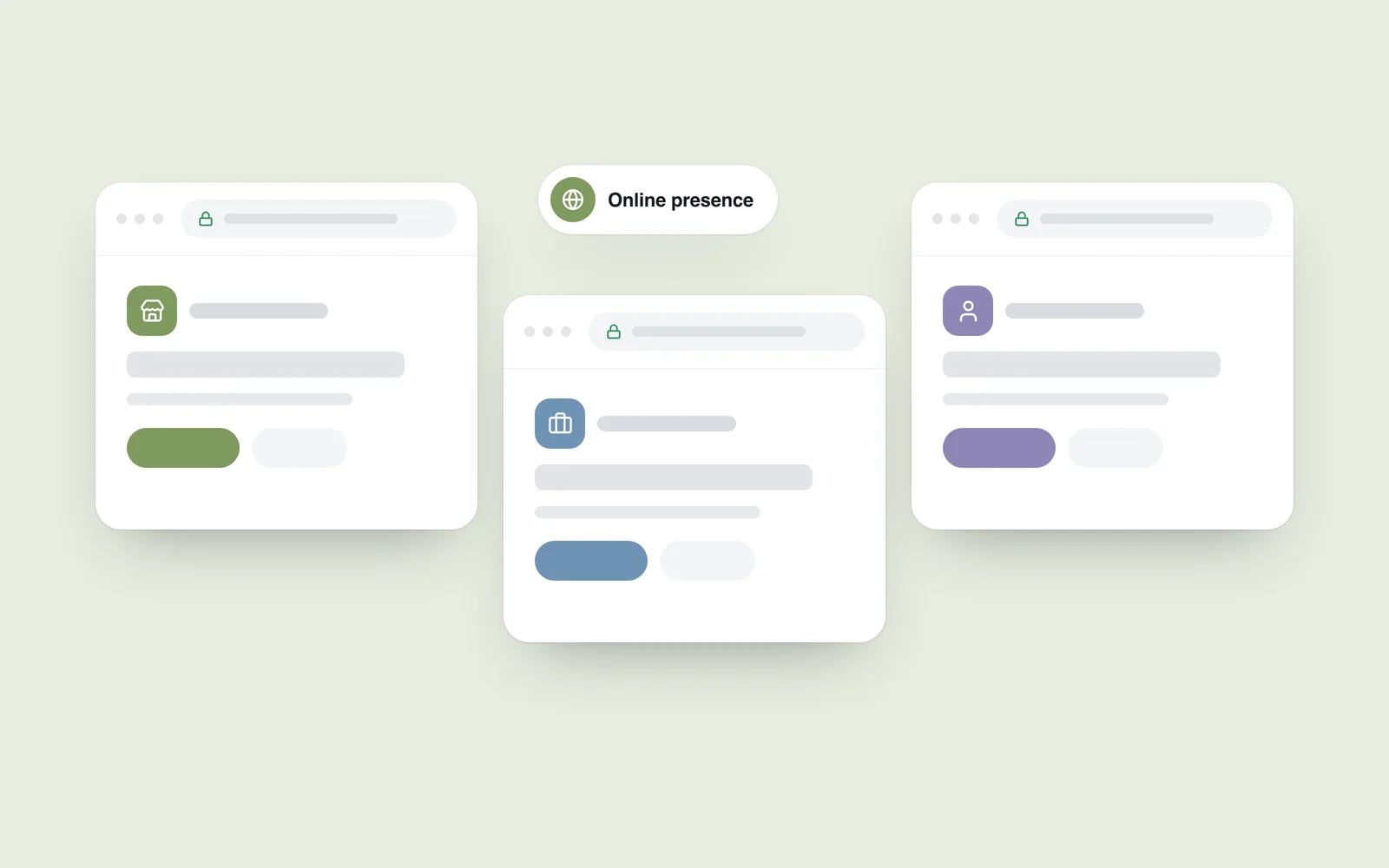
Now consider your target audience. Some are at work, others are travelling, and others live in a different district or neighbourhood. They differ in many ways, but most share one characteristic: they use the internet. If potential customers are online, it makes sense for your business to be represented there too. You need a place within that global network.
There are several ways to establish that presence:
- Social networks
- Online advertising
- Your own website
Let us consider each briefly.
Social networks are among the most popular parts of the internet. You can create a presence for your business, name it, design its appearance and make it recognisably yours. Managed well, it can work effectively. But your space remains part of another company's platform. You do not fully control it: its rules or policies may change, and the platform itself could close.
Online advertising is another well-developed, fast-growing channel. You pay a platform to promote your business online. Appropriately targeted advertising works while you fund it. Stop paying, and the advertising stops.
Finally:
Consider the benefits of creating your own website. You can build a platform around your preferences and publish the information you want about your business. You can turn it into an online store and change its content as needed. It belongs to you and offers much greater control. You can also combine it with both approaches described above.
You can connect it to social networks and advertise it online if you wish.
Owning a website does not prevent you from using social media or online advertising. Those channels can instead help develop your own platform.
What makes a successful website?
If a website could benefit your business, the next question is what it should be like. Which features help it succeed? These details matter.
Standards develop alongside technology, and keeping up with them is important.
Having almost any website might have been enough 10–15 years earlier. Expectations have since changed: your platform needs to meet the standards its audience expects.
These include:
- Design
- Functionality
- Adaptability
- Simplicity
People do not want to spend time on a website that looks poor, so design matters.
They do not want to use a website that cannot complete the task they came for. Functionality should fit its purpose.
They do not want a website that fails on their device, looks poor on a phone or makes text and content difficult to see. A modern website should adapt to the devices people use.
Nor do people want to struggle with confusing navigation. If they cannot find what they need, they will leave and look elsewhere. A website should be easy to use.
A website built to modern standards and managed well can support your business and help it establish a lasting place online.