SEO3 min read
Content Optimisation for More Traffic
Published by Samsiani

Successful SEO and content optimisation begin with effective keyword research. How confidently can you identify worthwhile keyword opportunities?
Try this short exercise:
Imagine writing an article about ‘guest blogging’, also called ‘guest posting’.
Which of those two keywords would you choose?
You could write two articles, but they would be almost identical, which would not serve readers well.
What else could you do?
You might:
- Compare search volumes and choose the more popular phrase.
- Compare competition and choose the less competitive phrase.
Both are reasonable considerations. But you do not necessarily need to choose just one phrase.
Why?
An article about guest blogging may also rank for guest posting.
The example below shows one page ranking for both phrases.
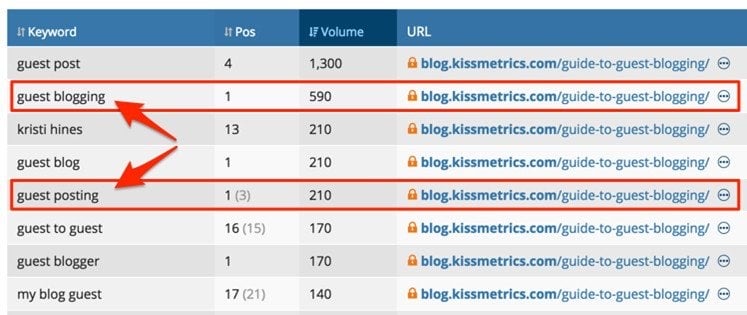
In the example, the article ranks first even though ‘guest posting’ does not appear in its title, metadata or H1.
How is that possible?
Search algorithms have changed, and marketers adapt
Older SEO advice often suggested targeting just one keyword per article.
Search engines have since become better at interpreting a wider range of information.
One article can therefore address several related queries even without repeating every phrase in its title or description.
Thorough coverage helps Google understand that the article examines the subject in detail.
In this example, Google recognises that guest blogging and guest posting refer to the same activity. Separate articles are not needed for the two phrases.
What does this mean for you?
After keyword research, examine Google results
The days when an almost uncontested long-tail phrase could quickly take an article to the first page are largely behind us.
After choosing a keyword, search for it and examine which other queries the leading pages also appear for.
Example:
Take ‘blog promotion’. The historical example below gives it 210 monthly searches, which might initially look too small to pursue.
Look more closely to understand the topic's full potential:
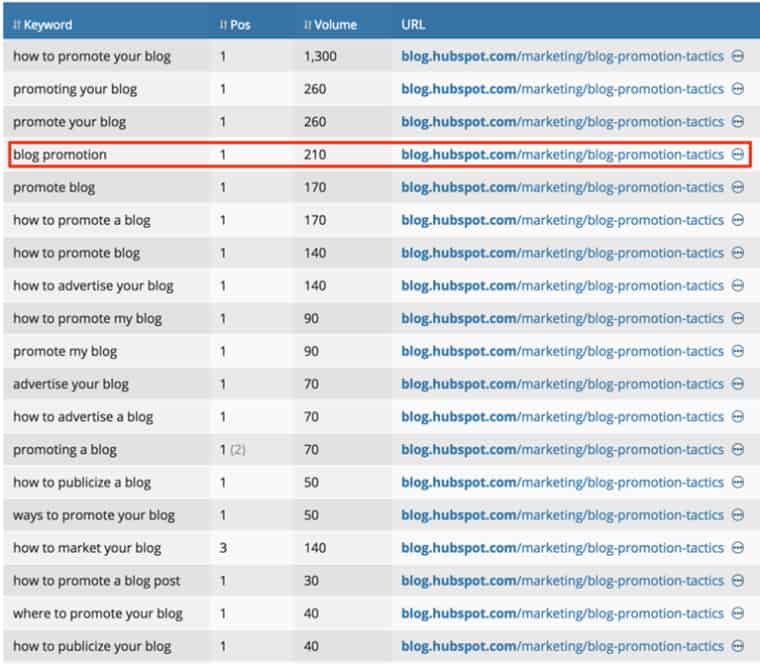
The example shows that ‘blog promotion’ is more than an isolated keyword.
It belongs to a broader subject with greater traffic potential.
In this case, ‘how to promote your blog’ offers a stronger main phrase because the example gives it a higher search volume.
This research helps you:
- Clarify the subject for Google by addressing relevant long-tail queries.
- Find useful ways to develop the article.
Conclusion
As Google's algorithms become better at understanding content, thoughtful optimisation remains important. The main point is clear:
Plan content around a group of related queries, rather than one isolated phrase.
Instead of asking, ‘How can I rank my article first?’,
ask:
Does my article deserve to be the first result?
Competitor analysis, keyword research and writing around what you learn help you optimise the factors that matter.
Source: smartseo.ge