BusinessUpdated 2 min read
Use customer feedback to choose website improvements
One customer asks for a larger button, another wants more photographs and a third could not complete an order. Implementing every request at once will not necessarily improve the website. First identify the task and the barrier.
Feedback is not always a ready-made specification. “Search is bad” might mean the field was hard to find, the vocabulary was unclear or the results were difficult to distinguish. Each explanation suggests a different response.
Connect opinions to observed actions
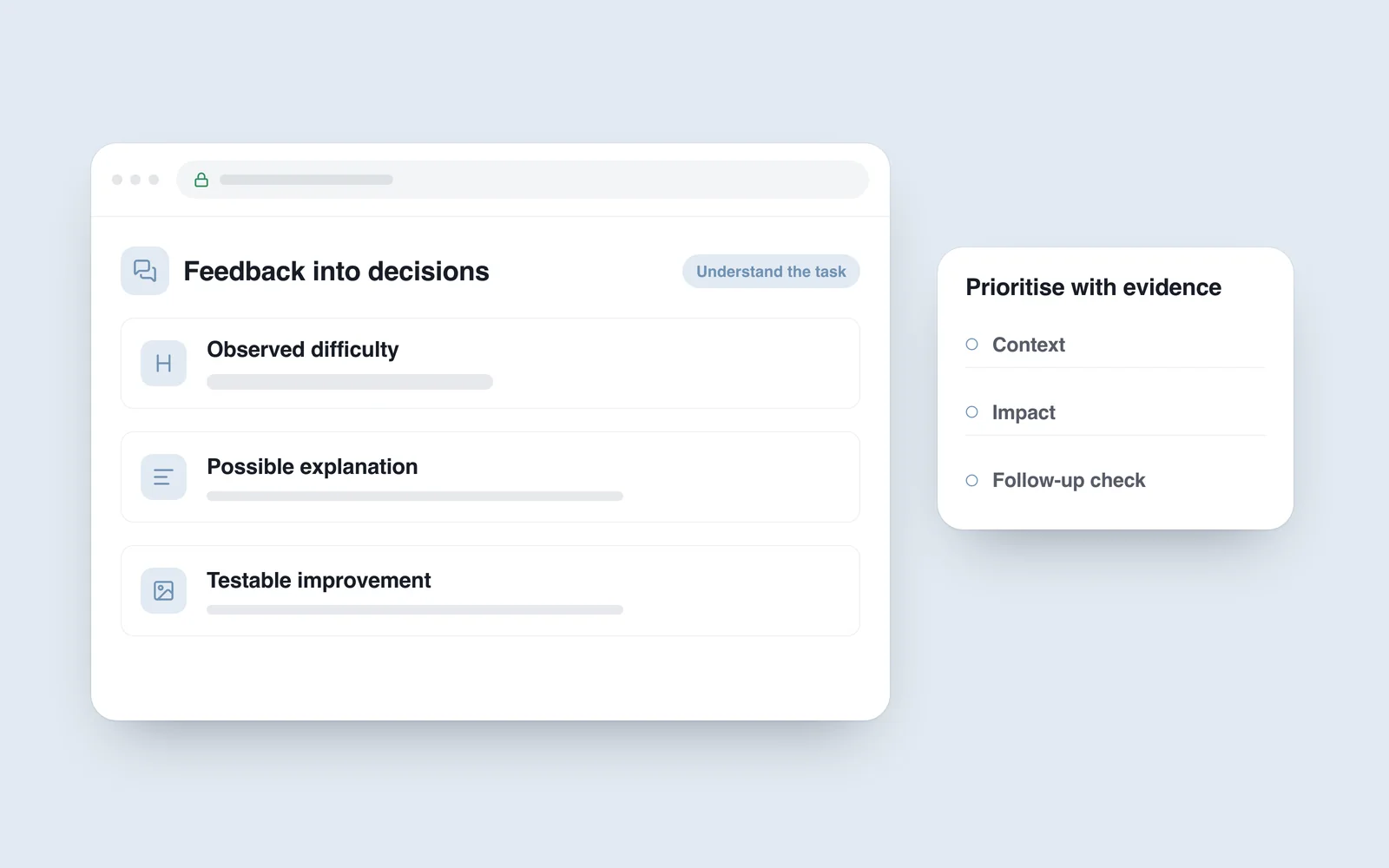
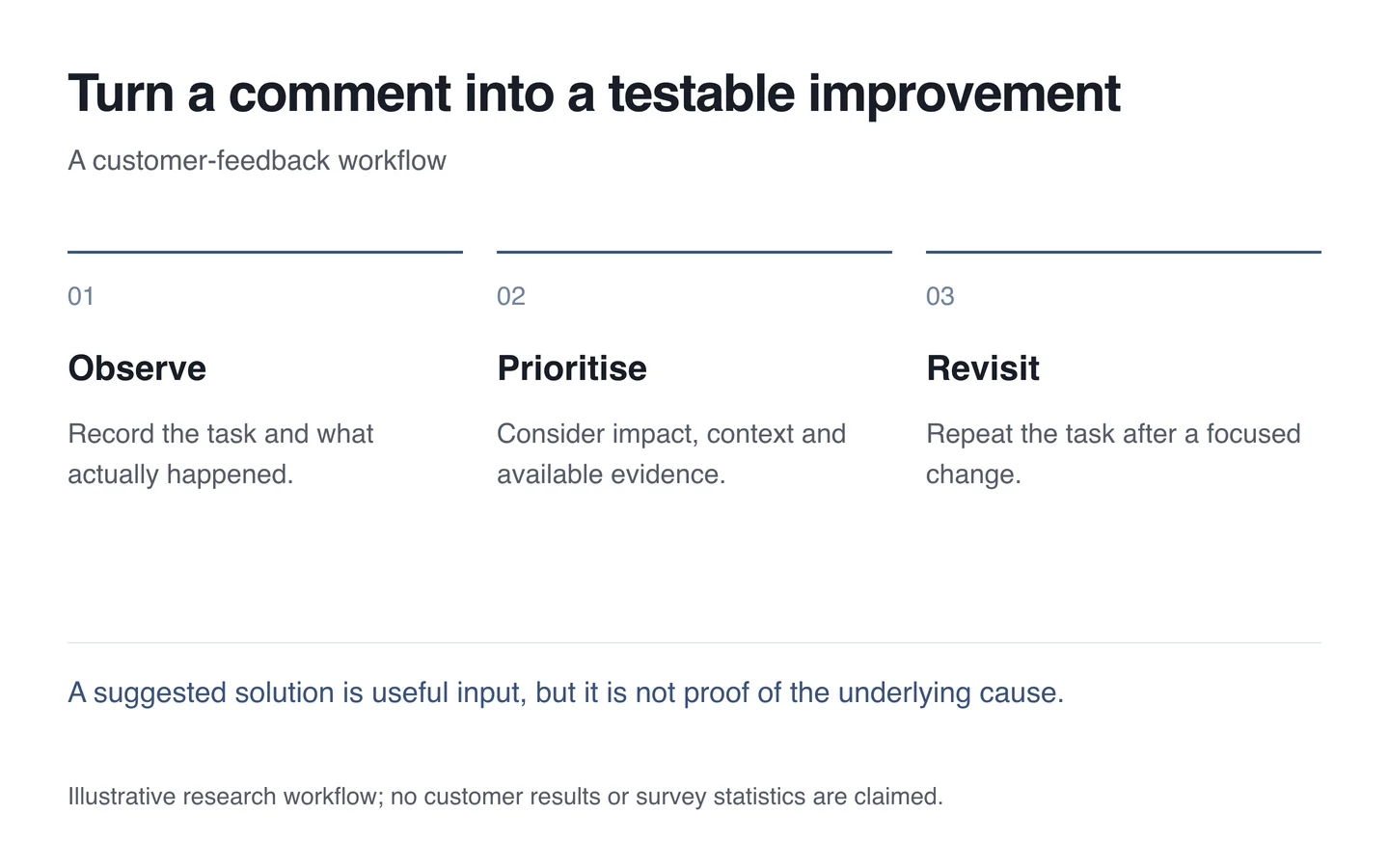
The Government Digital Service research-analysis guide separates observations, findings and actions. A small business can use the same distinction: record what happened before interpreting the cause.
Ask specific questions about the intended task, stopping point and expected result. Keep accurate notes. Treat a customer’s technical explanation as a possibility, rather than an established diagnosis. Where practical, observe the task itself.

Prioritise impact, not volume alone
Repeated feedback matters, but frequency needs context. An occasional error can be urgent if it blocks payment or access. A visual preference and a failure preventing completion deserve different treatment.
Record the journey stage, impact and available evidence. Mark uncertain causes explicitly. A few friends’ opinions are not representative audience statistics. Include people with different devices and abilities when the question calls for it.
Return to the original question
If customers cannot find delivery charges, adding a clear explanation near the product may help. Repeat the same task afterwards. The existence of a new content block does not establish that the problem is solved.
- Collect feedback with its task and context.
- Separate observation, explanation and proposed solution.
- Choose priorities using impact and evidence.
- Change enough to investigate the explanation.
- Review completion and remaining difficulties.
Protect personal information gathered during research and use it only as agreed. During website development, feedback is valuable because it improves understanding, not because it creates a longer request list. Retain the reason for each decision.