BusinessUpdated 2 min read
Website maintenance budgets: plan the work after launch
The site launches and the project budget is considered closed. Months later, domain renewal, an extension licence and a new feature request arrive together. Confusion often starts before the amount: maintenance and additional work were never distinguished.
Plan around daily business needs. An information site and a payment-enabled store have different responsibilities. A clear work inventory is more useful than one supposedly universal price.
Separate subscriptions from staff work
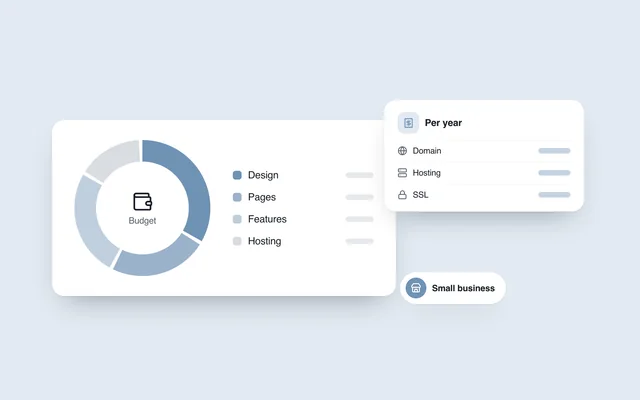
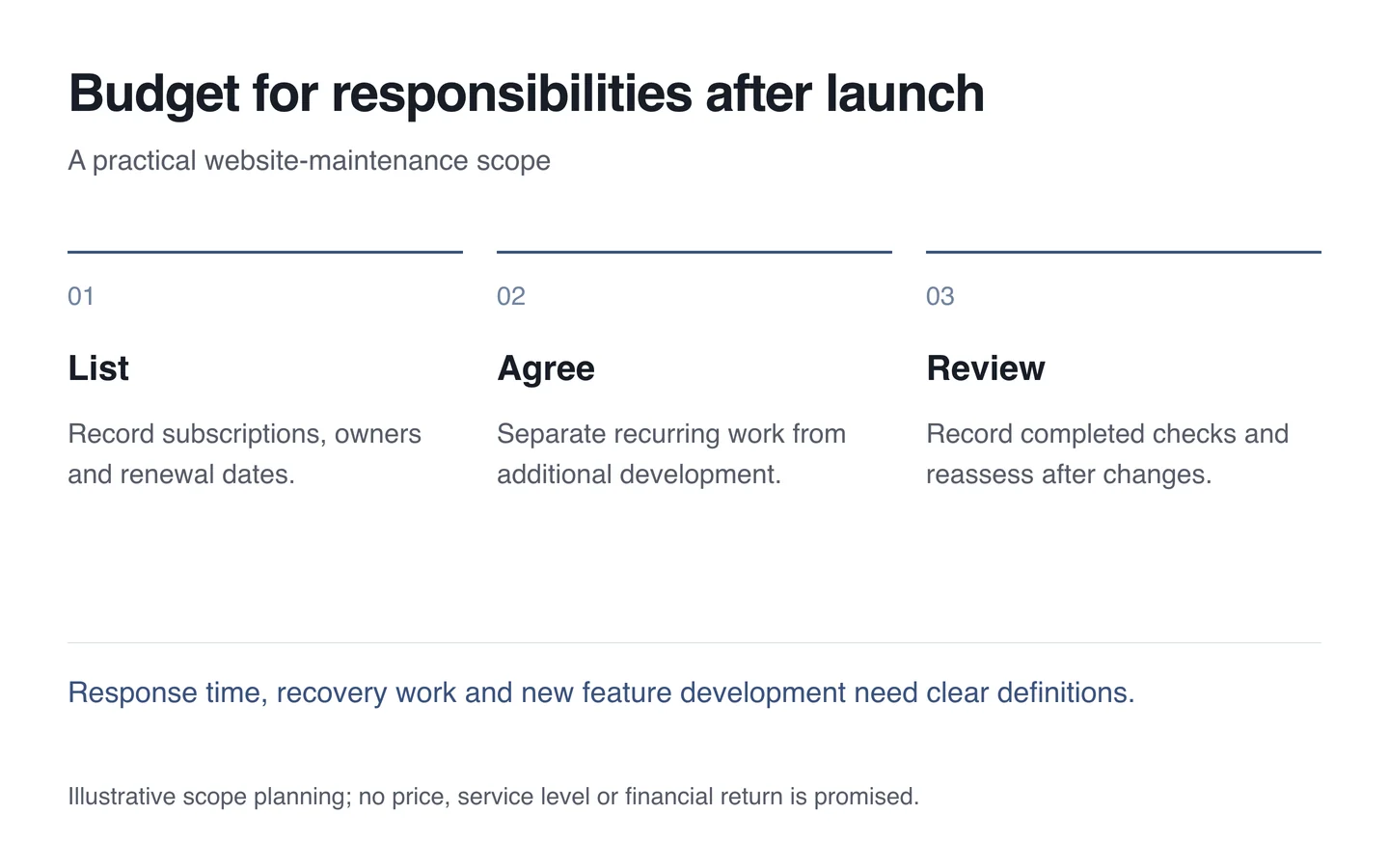
List the domain, hosting and paid services. Record renewal dates, controlling accounts and the person responsible for payment. Automatic renewal still needs oversight when cards or employees change.
Technical work includes updates, functional checks, monitoring and recovery readiness. The WordPress update documentation also explains the importance of a backup. Applying an update and verifying operation afterwards are different steps.

Distinguish routine changes from new features
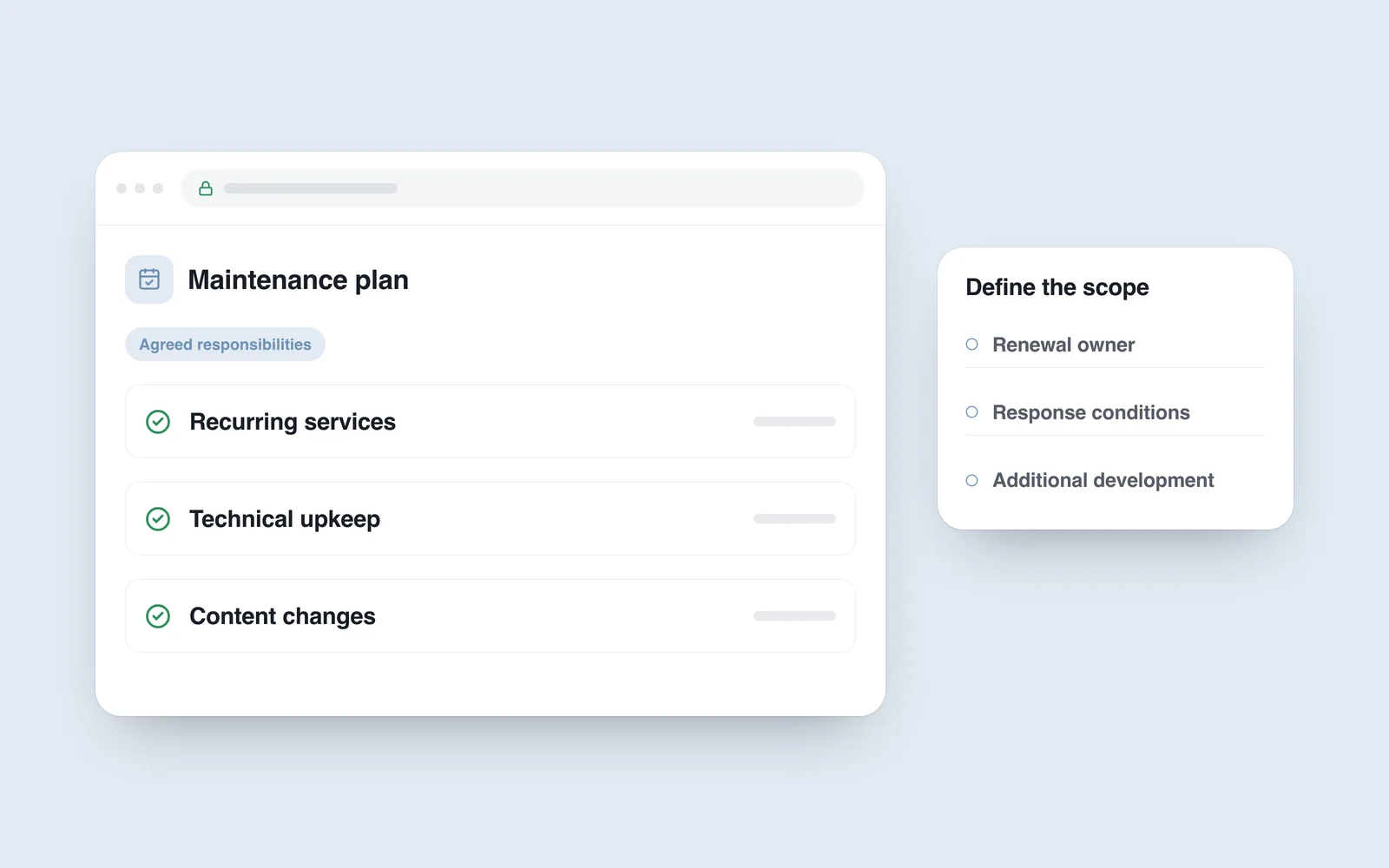
Correcting copy, adding products and integrating a new payment method have different scopes. Define included request types and how other work is estimated. “Everything included” without boundaries creates unrealistic expectations.
Clarify response conditions too. An outage and a photograph replacement have different urgency. Agree working hours, the notification route and responsibility. A prompt response should not be confused with a promise of immediate resolution.
Keep evidence of the work
A short periodic record should explain updates, checks and unresolved decisions. It also gives a later technician useful context. Keep secret access details out of public task lists.
- List recurring services and renewal dates.
- Separate maintenance from additional development.
- Agree incident reporting and response conditions.
- Define backups, recovery and functional verification.
- Review the budget after growth or a new integration.
A useful maintenance agreement explains responsibility as well as cost. The owner should understand both the regular service and decisions requiring further planning.