OtherUpdated 2 min read
RSS: follow website updates in one place
You follow several useful blogs but cannot open every site daily. Social feeds miss some articles and newsletters mix with other mail. RSS can collect updates from supported websites in a reader of your choice.
It is not another social network. A website publishes a feed file and the reader checks it for entries. You choose the sources, while interface and synchronisation depend on the application.
Understand what a feed contains
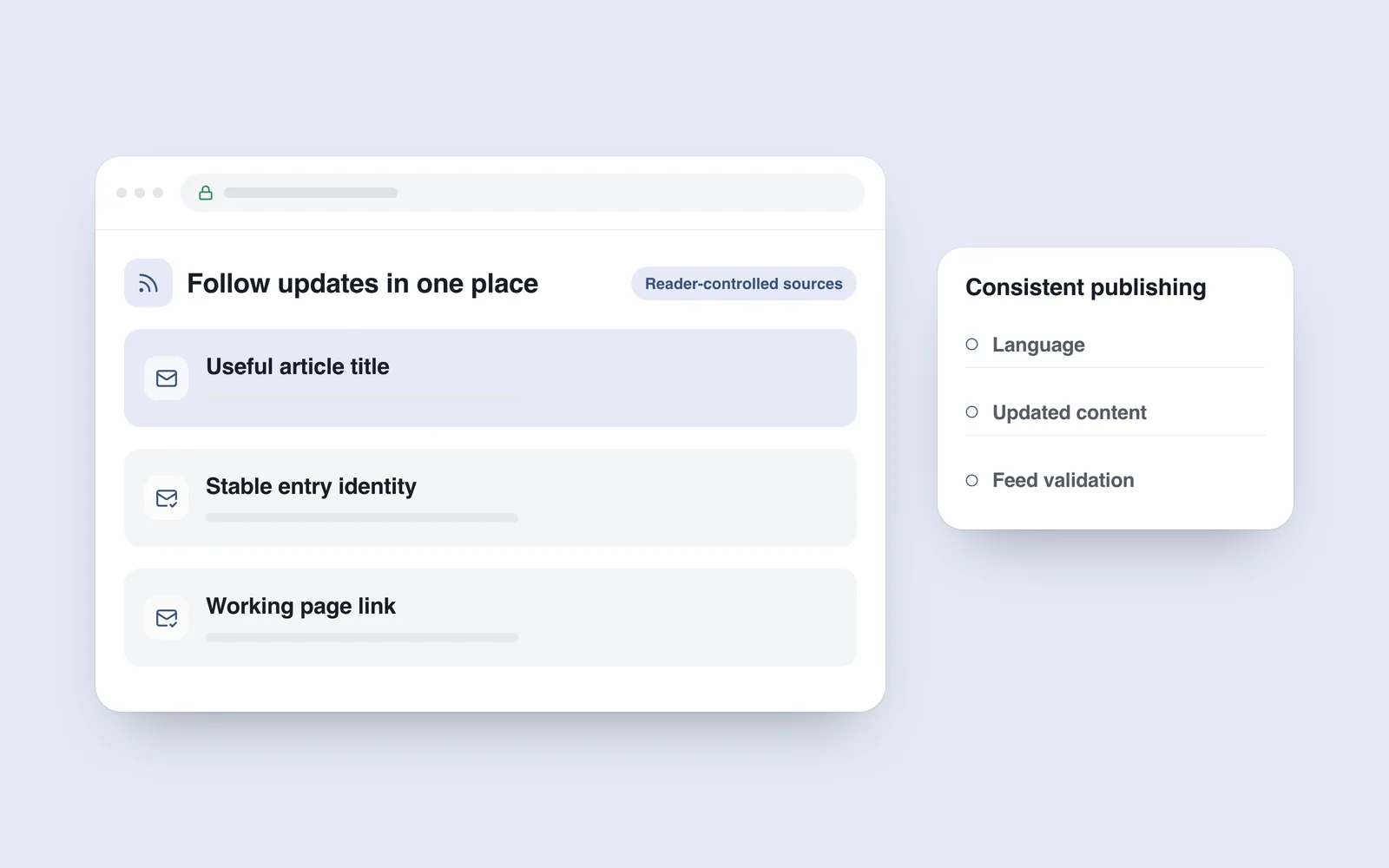
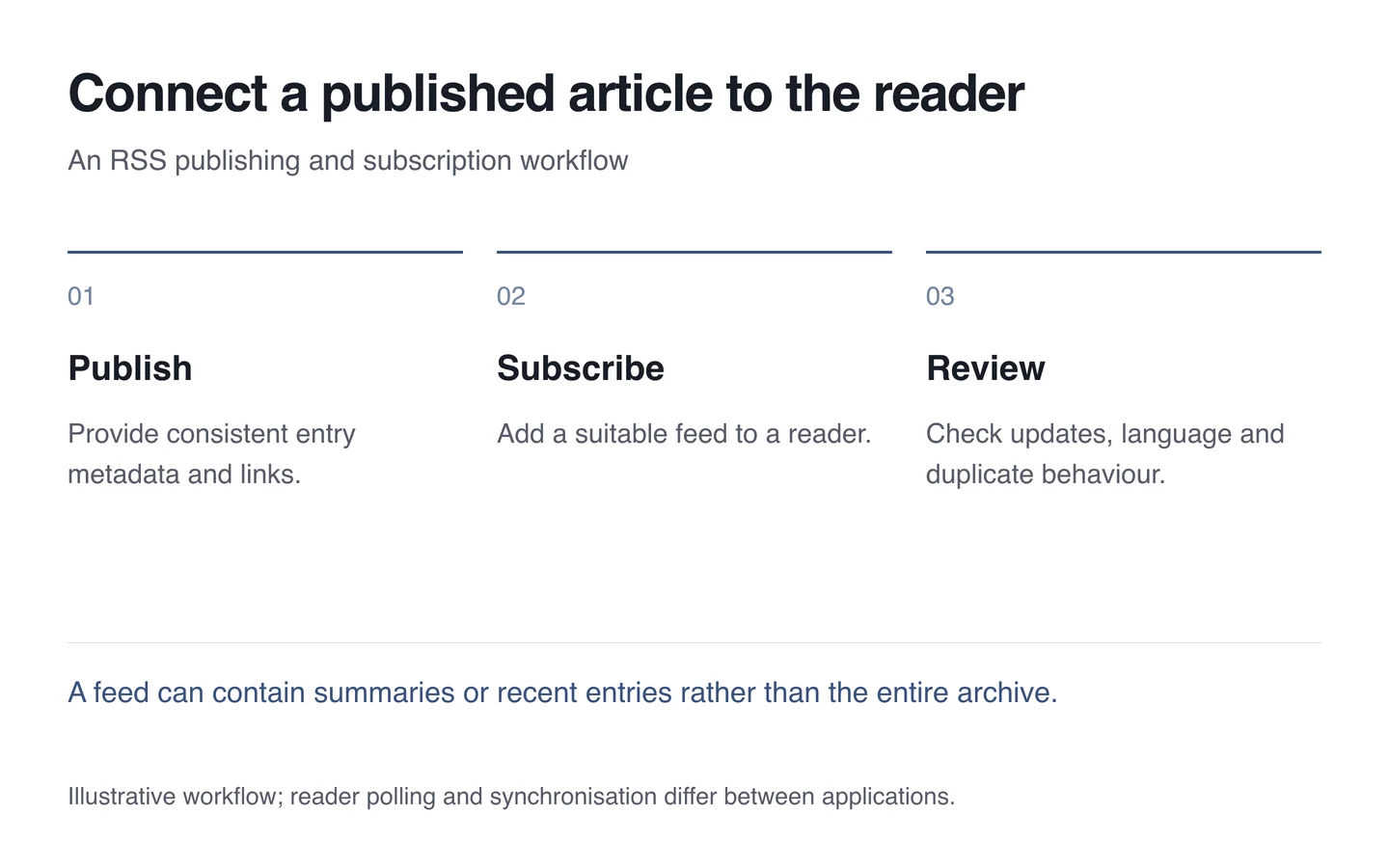
The RSS 2.0 specification describes an XML channel and its items. A useful blog feed supplies understandable titles, working article links and relevant information. Stable identifiers help readers recognise entries rather than duplicate them.
Add the feed address to a reader or use the website’s subscription link. Not every site offers RSS. Some feeds contain summaries and others full text. Availability does not imply unrestricted access to the entire website or paid material.

Publish consistently
Do not assign a new item identifier for every small edit without a reason. Keep dates, titles and links consistent with the article. Separate language feeds or identify their scope clearly.
Validate the format using real content. An incorrectly escaped character can break XML parsing. Test Georgian letters, actual titles and the behaviour of an updated article rather than relying on one simple English example.
Recognise the limits
Readers usually check periodically, so updates are not always immediate. A feed may retain only recent entries. Adding it does not guarantee the complete historical archive; use the website’s archive for older material.
- Choose relevant, trustworthy sources.
- Check the language and amount of included text.
- Open the current article for important details.
- Test update and duplicate behaviour as a publisher.
- Place the subscription link somewhere understandable.
During blog development, RSS can provide an additional reader relationship. It complements email and social channels while making a personal reading list easier to maintain.