OtherUpdated 2 min read
Gmail sender requirements in 2024: check your domain setup
A website reports a successful submission but the recipient sees no message. Application code may be responsible, yet the sending route and domain authentication also need review. Rewording the email cannot resolve every delivery problem.
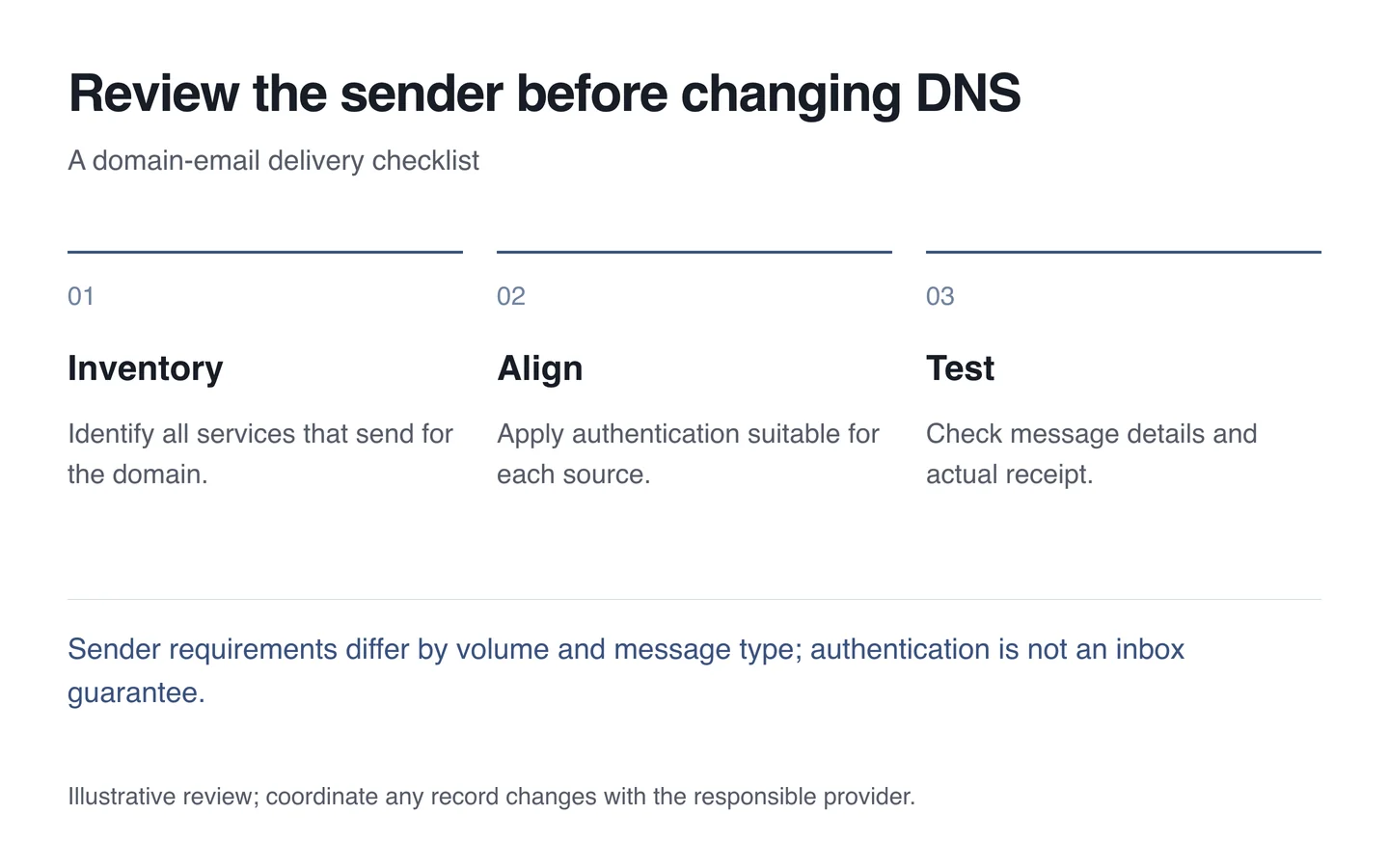
Employee mail, enquiry forms, orders and marketing platforms may all send for one company. Inventory those sources before editing domain settings. Repairing one route must not disable another.
Distinguish sender requirements
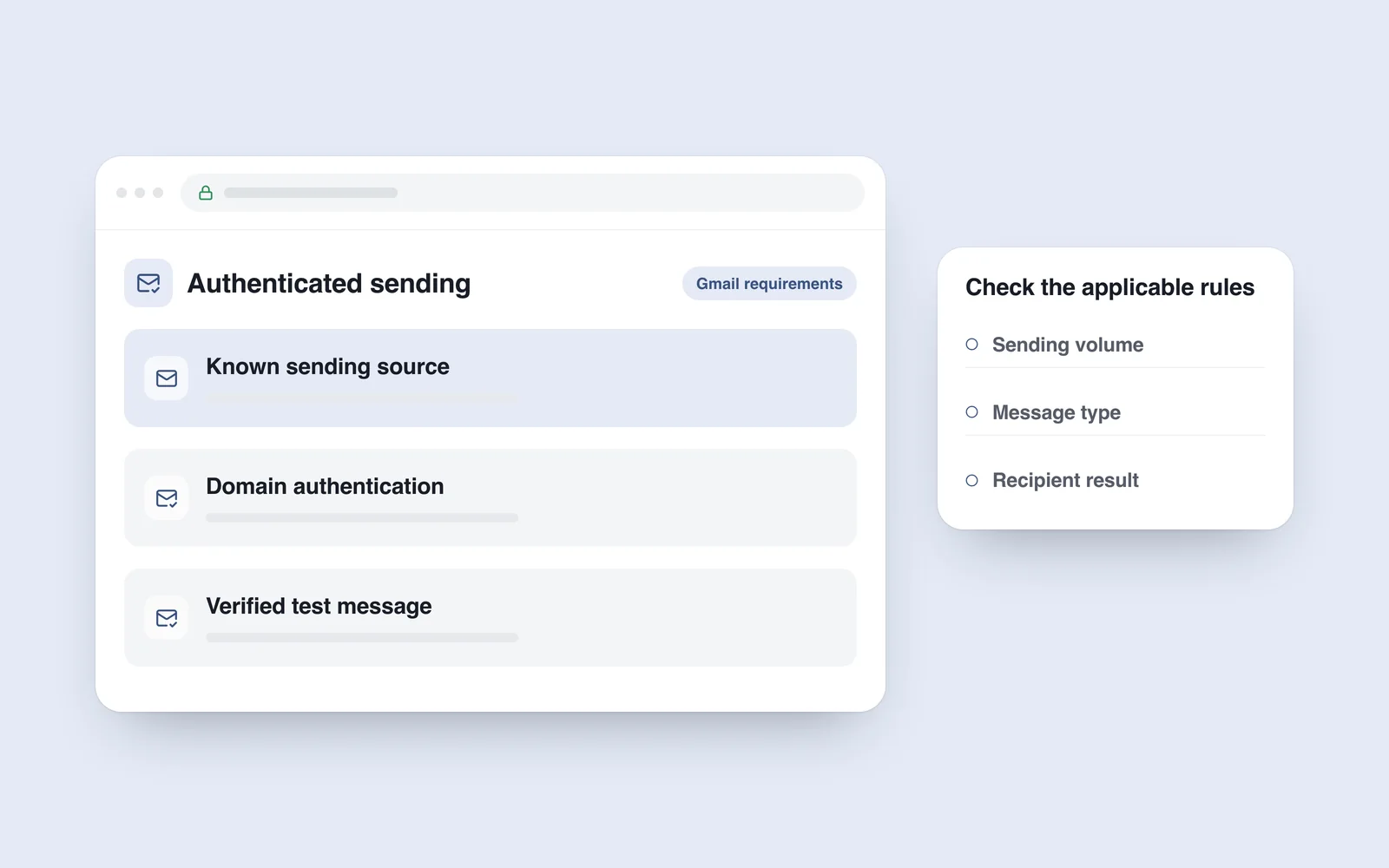
Google’s October 2023 announcement introduced additional requirements beginning in February 2024. The official guidelines distinguish senders to personal Gmail accounts from those exceeding 5,000 messages daily.
All senders need SPF or DKIM; bulk senders need SPF, DKIM and DMARC. Further conditions include secure transport and alignment. The one-click unsubscribe requirement for bulk marketing and subscribed messages should not be indiscriminately applied to every ordinary contact email.

Match records to actual sources
A copied DNS example is not enough. SPF authorisation should reflect legitimate sending sources, and DKIM requires the provider’s correct signing configuration. DMARC assessment also considers alignment with the visible sender domain.
Coordinate with providers rather than applying one service’s instructions blindly across the domain. Preserve existing records and assess impact before changes. Investigate unknown sources before enabling a strict enforcement policy.
Test each sending route
Send a controlled test from each source and inspect authentication results in message details. Review receipt, spam placement and reported errors too. Correct authentication does not guarantee inbox delivery: consent, content and sender reputation still matter.
- Inventory all legitimate sending services.
- Establish volume and applicable requirements.
- Coordinate DNS records and signing with providers.
- Test enquiries, orders and marketing separately.
- Retain evidence and a recovery route.
Include email in website support checks. A message being sent and a message being received are distinct states. Both deserve verification alongside the form’s appearance.