Business3 min read
Plan a multilingual website before translating it
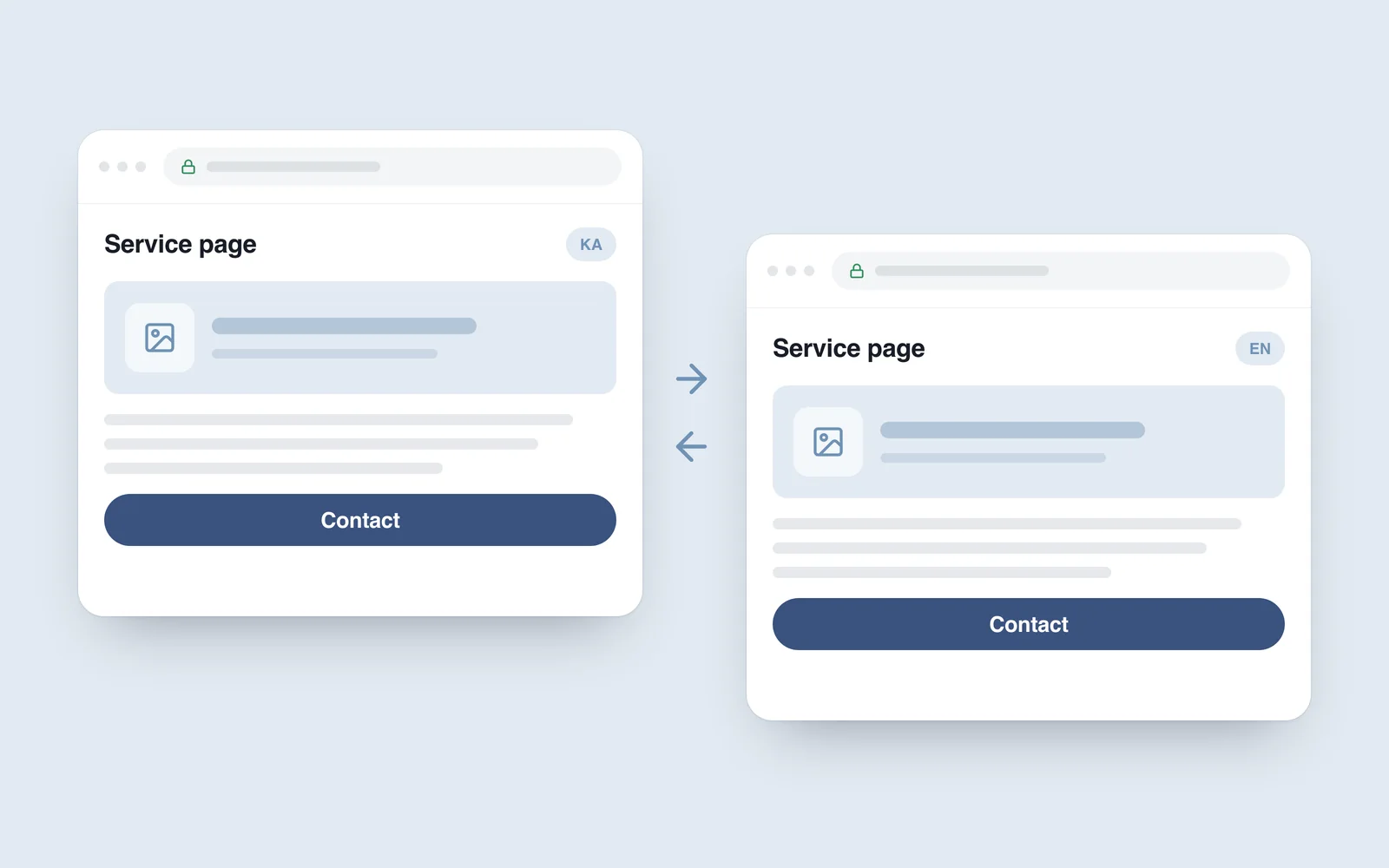
A language switch has been added, yet parts of the English website remain Georgian. The service copy is translated but the form error is not. A visitor changes language on a product page and lands on the homepage, starting the search again.
A multilingual website is a shared project involving content, navigation and maintenance. Before translation begins, establish the audiences, the information each needs and who will keep the versions current.
Choose languages for real audiences
An international resident in Georgia, an overseas partner and someone buying from another country may need different answers. Identify who the additional version will serve.
A language count alone is a weak basis for the choice. Review enquiries, customer questions and service capacity. If an enquiry arrives in another language, the team also needs to be able to respond and deliver the service.
Inventory all the text that needs attention
Go beyond articles and service paragraphs. Include navigation, buttons, form labels and messages, product specifications, search results and descriptions of downloadable documents.
Review search titles, descriptions and image alternative text separately. Small fragments are easily overlooked, even though customers encounter them during real tasks.

Preserve meaning and business conditions
Word-for-word translation does not always read naturally. Keep the service, conditions and facts accurate while allowing sentence structure to suit the language and reader.
Create a short terminology list for product types, service names and frequent actions. A clear enquiry label should not become an ambiguous term on another page.
Agree differences in pricing, delivery or service areas explicitly. Translators should not have to infer business policy. A competent language editor and the responsible team should review the final material.
Switch to the equivalent page
Google's multilingual-site guidance recommends separate URLs for language versions. A language link should take someone to the equivalent service or product where that page exists.
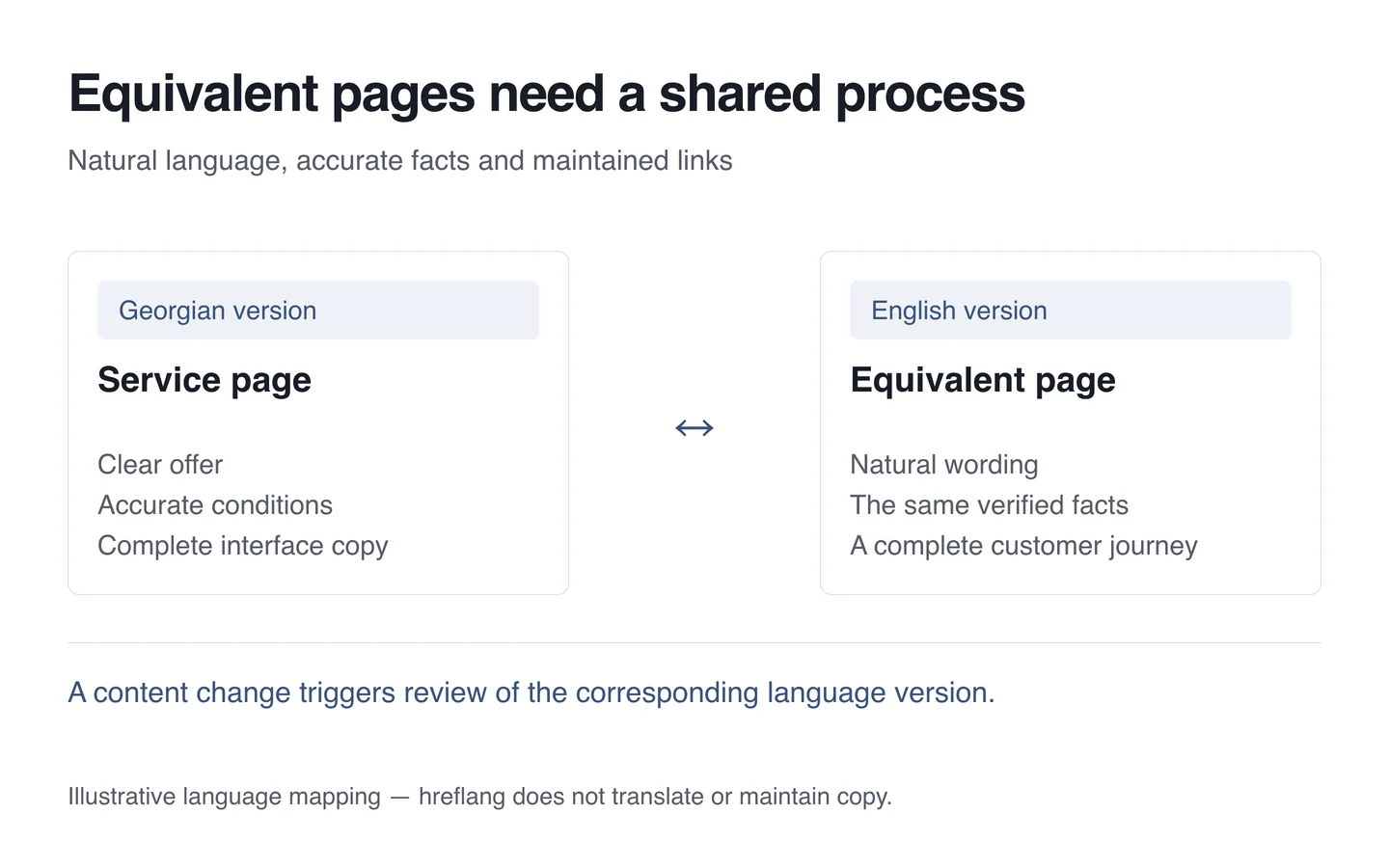
Hreflang annotations help search engines understand corresponding language URLs. They do not translate text or repair a broken switcher. The technical relationships must match the real pages.
Do not trap people in a version based only on their browser language. Someone using a Georgian device may want to read the English page. Keep the choice easy to change.
Decide how updates will be maintained
If a condition changes on the Georgian service page, who is notified and updates English? An old promise can remain live when only one version changes.
Agree a simple workflow for changes, review and publication. Do not publish unfinished translations as empty pages. Where necessary, make it clear which material is available in each language.
A short planning checklist
- Audience, language and the actual ability to serve it.
- Pages and every part of the interface copy.
- Terminology, business conditions and a final editor.
- Equivalent URLs and language-switch behaviour.
- A person responsible for subsequent changes.
Include this work early in planning a multilingual website. That gives customers a complete journey in both versions, supported by a process that lasts beyond the initial translation file.