DesignUpdated 3 min read
What Makes Good Web Design? Eight Principles to Follow
Published by Samsiani
Good web design affects user experience, lead generation and revenue, so careful planning matters. When someone first encounters a business online, 94% of their first impression is influenced by web design.
What makes good web design, and how can you create a website that meets the right criteria?
Why good website design matters
Good web design helps visitors use your website and find information. It creates an important first impression, highlights your products and services, and helps people reach their goals. A quality website is about more than appearance: it brings together several elements.
Effective web design makes a website simple and enjoyable to use. When your website is appealing and has a clear purpose, people are more likely to engage with your business.
Appearance and usability should work together to guide visitors towards taking action. Keep the following principles in mind.

Purpose
People visit your website for a reason, whether to look at a product or learn about your company. An effective design meets those needs and guides visitors towards the action you want them to take. Each page therefore needs a clear purpose and appropriate calls to action.
Define your customer personas, their expectations and how they behave on your website. Different personas respond differently to design choices, so consider their preferences when creating the site.
Simplicity
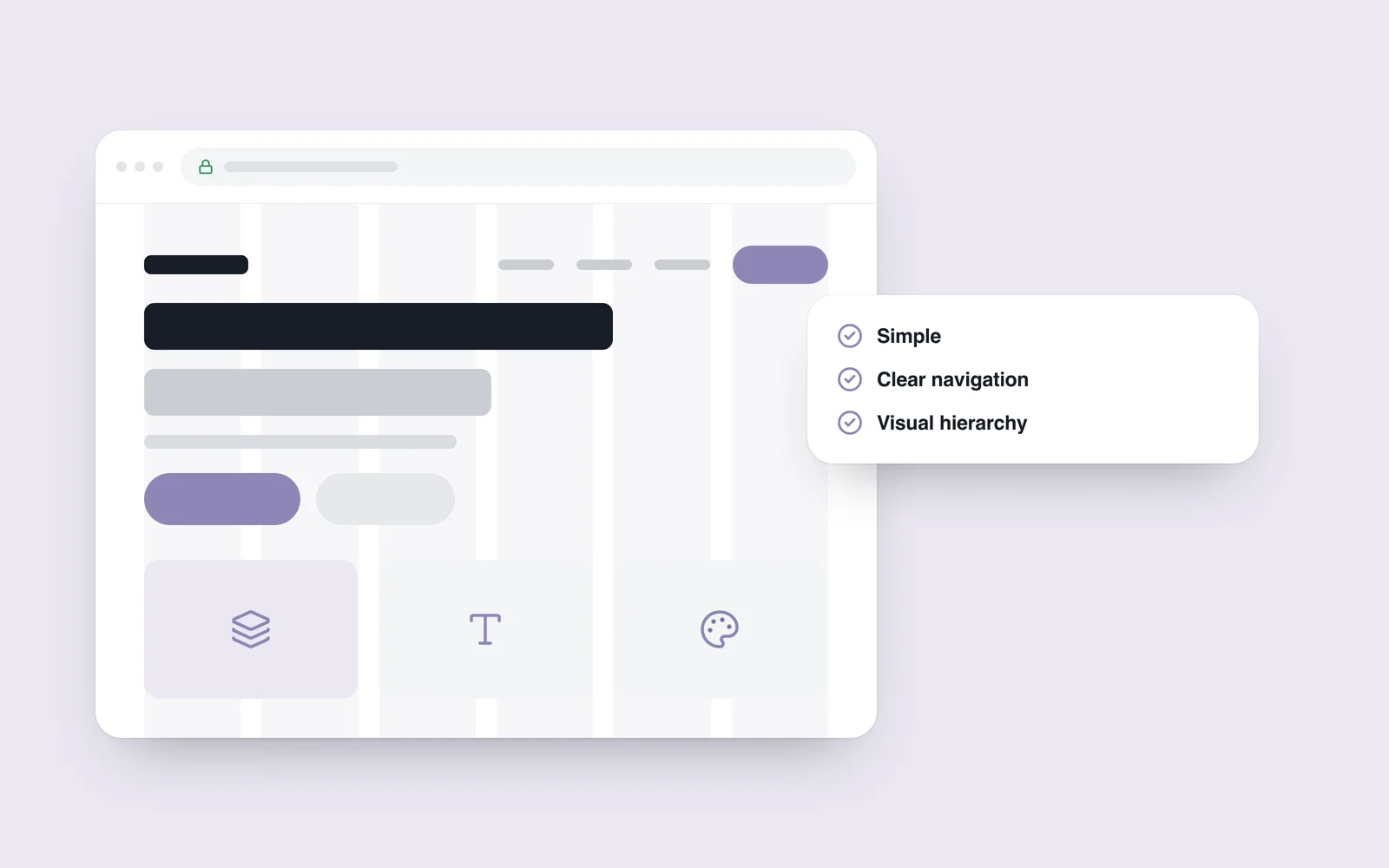
Everything on your website should be clear, understandable and easy to take in, allowing visitors to find information or complete a task. Simple design and navigation are essential to this.
Key elements:
- Colour: choose a palette that suits your brand, supports the behaviour you want to encourage and creates the right emotional response. Use complementary colours to reinforce your brand identity.
- Typography: use fonts that are readable, suited to the web and easy to distinguish. Well-chosen typography attracts attention and expresses your brand identity.
- Imagery: photos, illustrations, videos and graphics should reflect your brand and direct attention to relevant information. Balancing visuals with text makes content more engaging and memorable.

Navigation
Simple, intuitive and consistent navigation helps keep visitors on your website. An effective navigation structure includes:
- A search bar
- Navigation in the footer
- A straightforward menu with a limited number of items
- Descriptive keywords in links to internal pages
Visual hierarchy
Good web design arranges information by importance, using colour, size, contrast and imagery to establish focal points. A clear visual hierarchy naturally draws attention towards the page's main content.
Visitors often scan web pages in an F-shaped pattern, concentrating on the top and left-hand areas. Taking this reading behaviour into account can improve their experience.
Content
Content is essential to attracting and influencing visitors. People value quality and credibility, and useful, understandable content helps them take action. Apply search engine optimisation (SEO) principles to reach more visitors and incorporate relevant keywords.
Use bold and italic text to highlight important details. Add lists and headings so that readers can quickly understand the material. Many visitors scan a page before reading it, so make key information easy to spot.
Functionality
Visitors expect familiar conventions, such as a clickable logo that returns them to the homepage or links that change colour after being visited. Respecting these conventions makes your website more useful and comfortable to navigate.
A good website works well on mobile devices and uses responsive design to provide a good experience on different screens. The layout may look different on a computer and a smartphone, but visitors should always be able to find what they need easily. These are the questions we address in our UI/UX design process: we plan user journeys and check how easy the interface is to use.