TipsUpdated 2 min read
Domain and website access: what the owner should control
The website works, but its domain renewal notice goes to a former employee. The deadline is approaching and nobody can sign in. The failure begins with ownership of the process, rather than faulty website code.
The business owner need not perform every technical task. They should know where each service is managed, who is responsible and how access can be recovered when the usual person is unavailable.
Keep a short service register
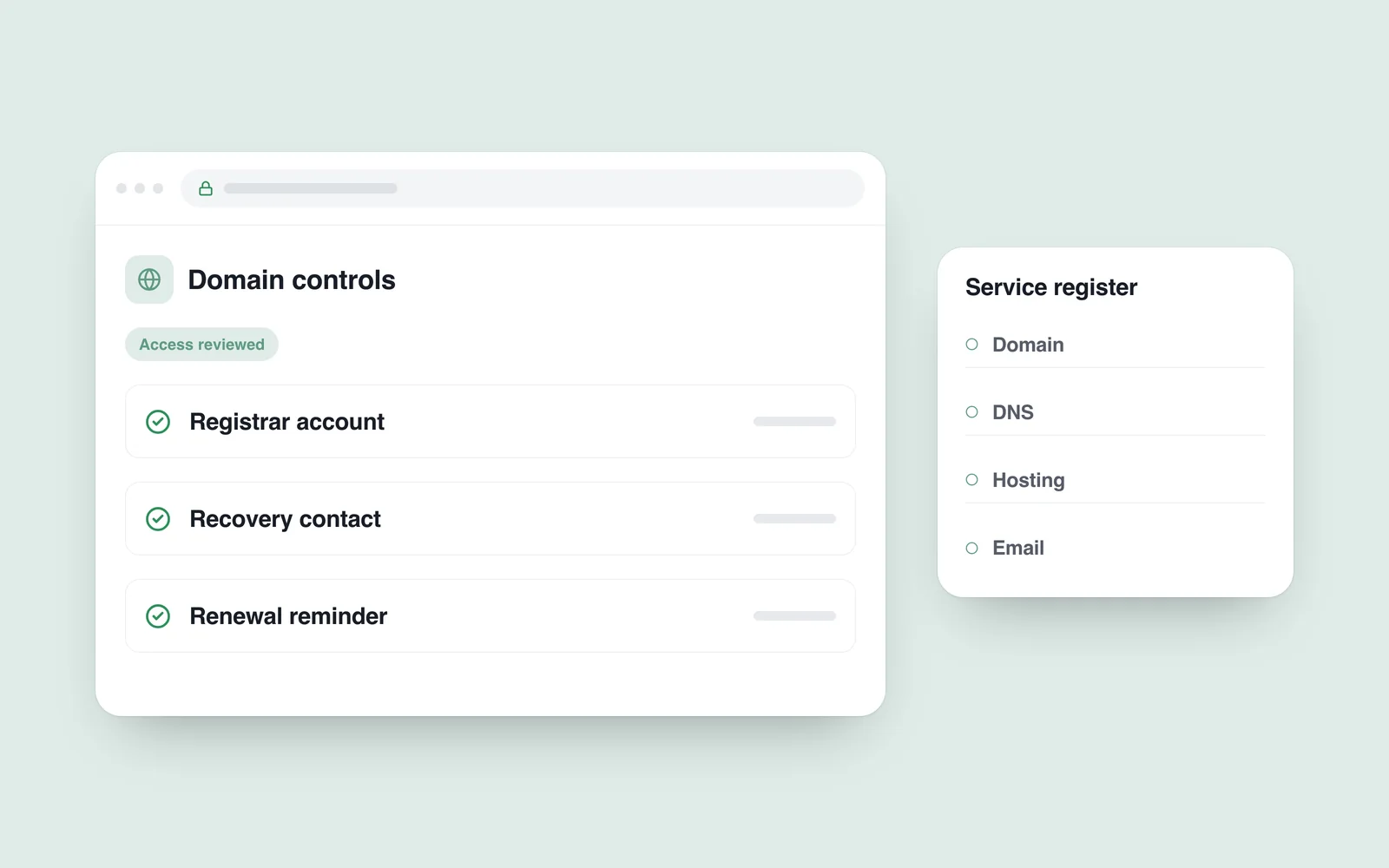
Record the registrar, DNS management, hosting and email separately. They may be supplied by different companies. Include renewal dates, the responsible person and the route to support.
Do not put passwords in a broadly shared document. Keep secrets in an appropriate protected store and record only the access process in the responsibility list. Recovery email addresses must remain under active control.

Separate renewal from transfer
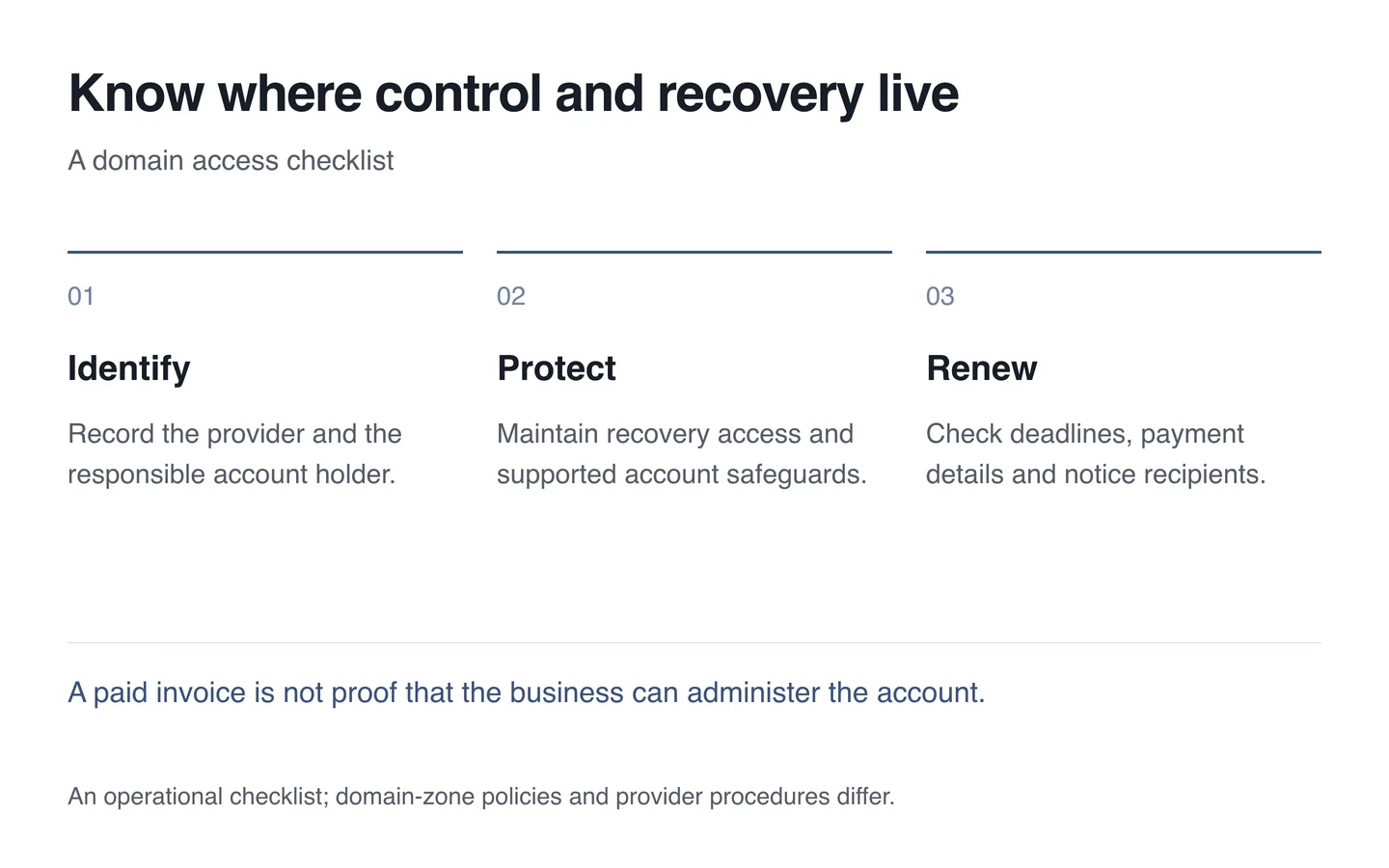
Paying the renewal invoice does not prove that someone can administer the account. Check registration and contact details, payment arrangements and receipt of notices. Automatic renewal still depends on a working payment method.
An ICANN explanation from 2017 describes possible restrictions when transferring between registrars. Verify the rules for the actual domain zone with its provider; international policies should not automatically be assumed to apply to .ge domains.
Giving a new website team access does not necessarily require moving the domain to another registrar. First establish precisely which service is changing and which arrangements remain in place.
Check the practical recovery route
- Identify who can access the registrar and DNS accounts.
- Confirm the renewal deadline and notification recipient.
- Test account recovery using the provider’s secure process.
- Enable additional account protection where supported.
- Record revoked access and remaining responsibilities when the team changes.
Preserve the current settings before significant changes and verify website and email operation afterwards. Include access management and renewal monitoring explicitly in the technical support agreement.