OtherUpdated 2 min read
Domain, hosting and website: how the pieces fit together
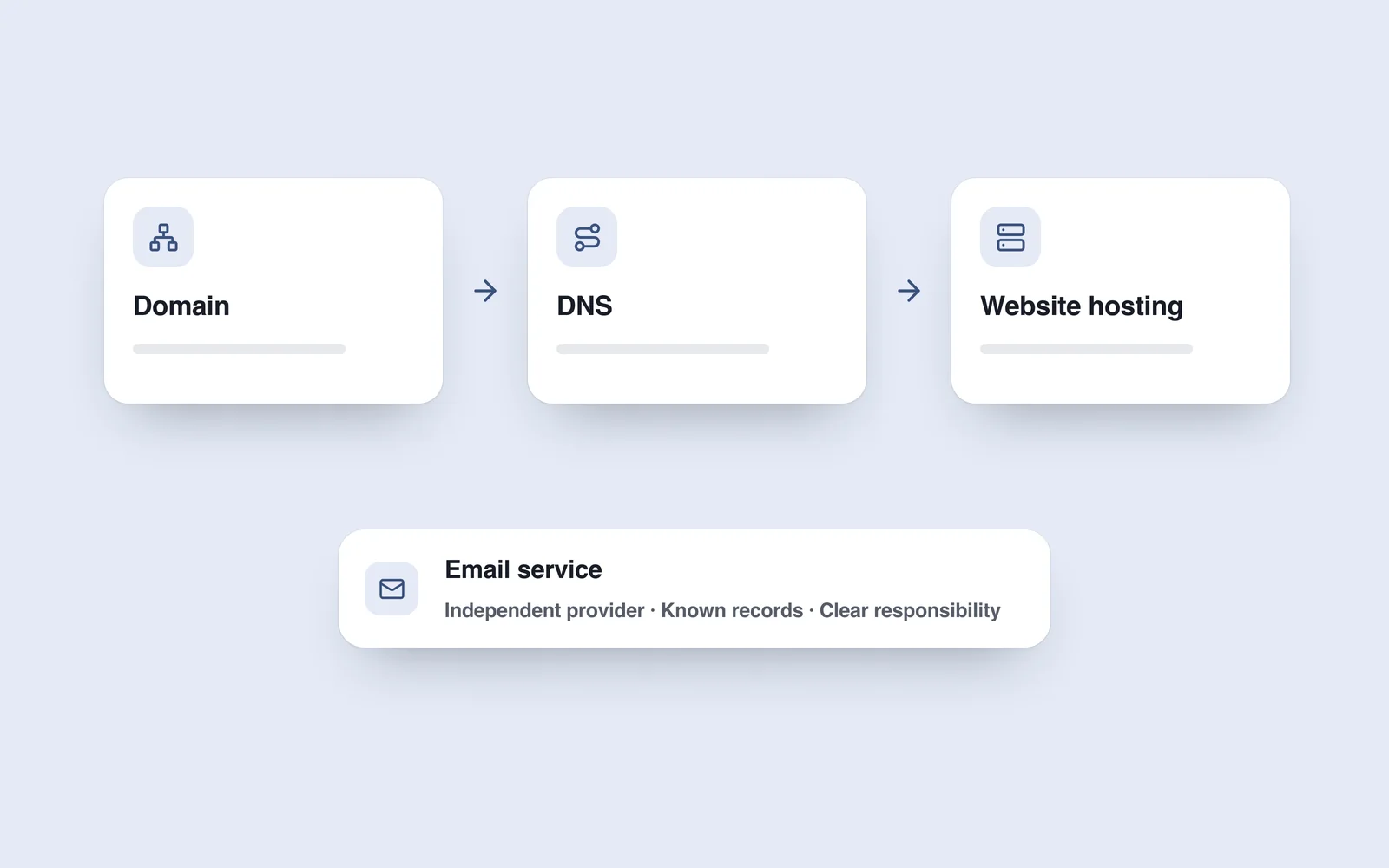
“I registered the domain, so why is the website missing?” The question combines several separate services. Registration gives control over an address; displaying a website also requires the pages themselves, a place to run them and a correct connection between the pieces.
Understanding the terms does not require becoming a technician. It helps an owner recognise what they are paying for, where to seek help and which parts may change when switching suppliers.
Distinguish the address, records and hosting
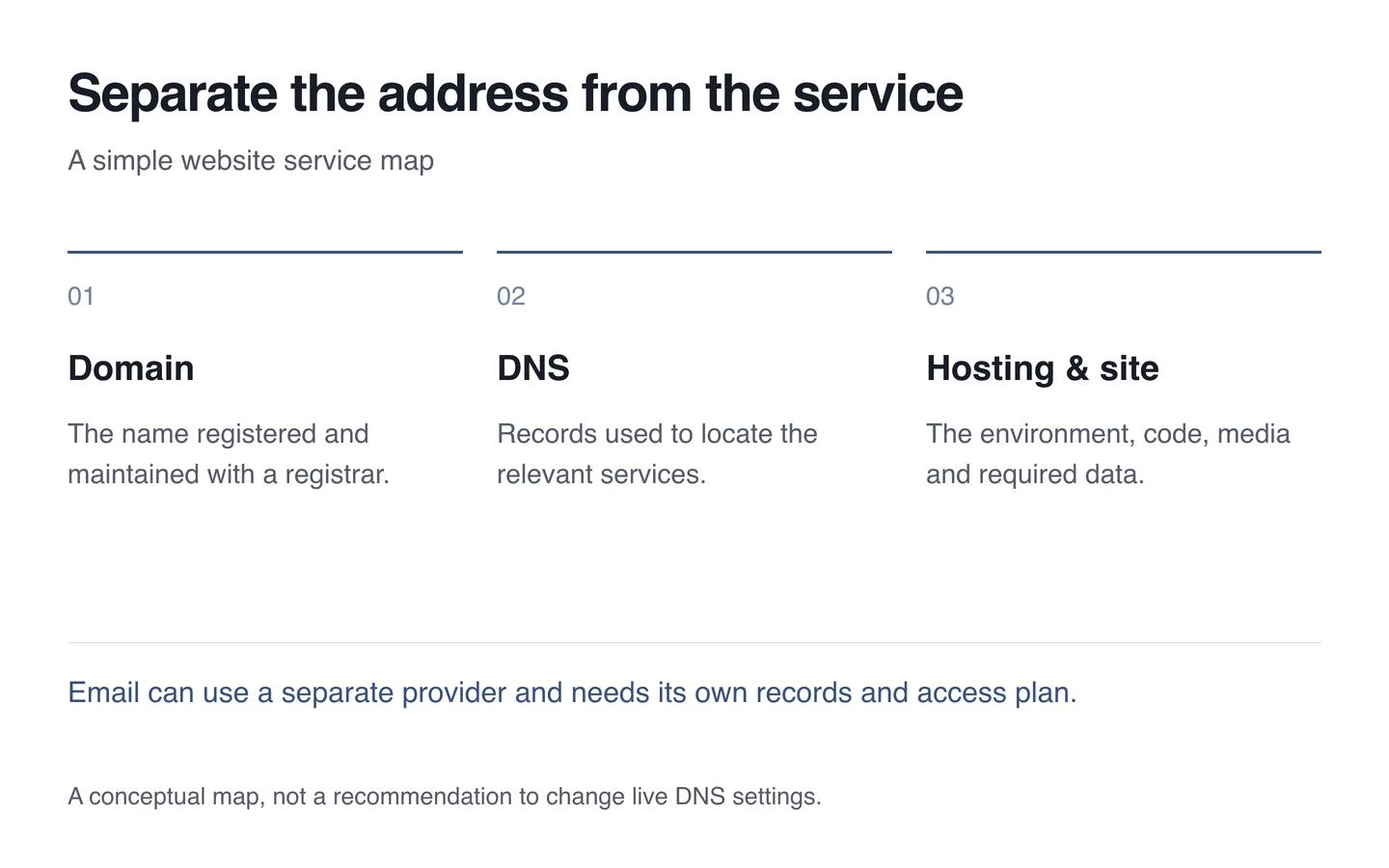
A domain is the name entered in a browser. DNS records provide information used to direct requests to the appropriate services. The foundations are described in the domain name specification.
Hosting provides an environment for the website to operate. The website consists of pages, code, media and, where required, a database. Those components can move to a different environment while the domain stays the same, provided the transition is planned properly.

The services need not share one provider
A domain can be registered with one supplier, the website hosted by another and email handled by a third. Problems arise when nobody records the responsibilities and access arrangements.
Changing hosting does not itself mean losing the domain. A copy of the website files also does not automatically include mailbox records or access to the registrar account. List each service separately when reviewing an agreement or proposal.
Ask three questions before changing anything
- What changes? Website hosting alone, the registrar or DNS management too?
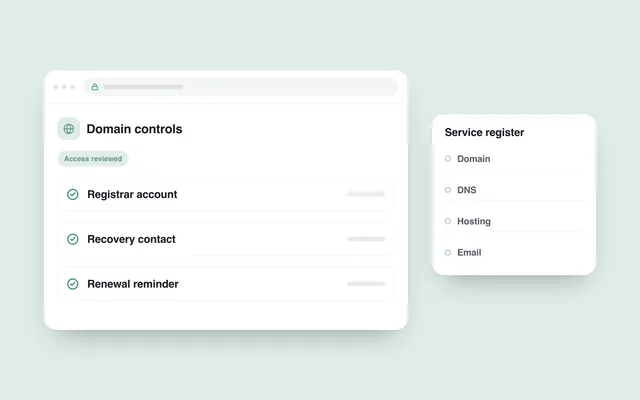
- Who controls it? Identify working access, recovery arrangements and responsibility for the change.
- What needs checking? Include important pages, email, forms and connected services.
Do not alter a technical setting simply because a new supplier is involved. Preserve the working arrangement and understand each record’s purpose first. An incorrect change can disrupt email even when the intention was only to move a website.
At the end of website development, request a short service map: what runs where, when it renews and whom to contact. That record also makes the next change easier to plan.