Development3 min read
WordPress vs Joomla: Which Is Better, and Why?
Published by Samsiani

Are you planning to create a website and choosing between WordPress and Joomla?
WordPress receives plenty of positive feedback and is the most popular platform, but it is not the only CMS you can use to build a website.
Let us compare them.
WordPress vs Joomla: what the figures show
Both WordPress and Joomla are widely used, free platforms that had existed for more than a decade when this article was written.

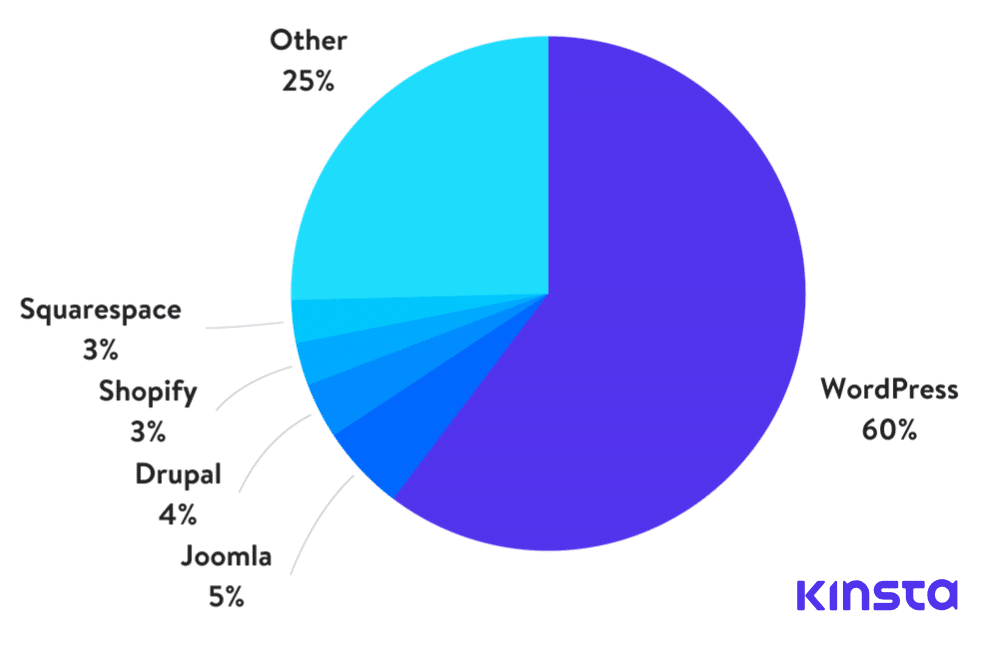
WordPress began as a blogging platform in 2003 and developed into a more capable, versatile system. The figures cited here gave it 34% of all websites and 60.8% of the CMS market.

Joomla was created in 2005. Its approach resembles older versions of WordPress.
It accounted for 3% of all websites and 5.4% of the CMS market in the figures used here, placing it second behind WordPress.
The Google Trends chart below shows interest in the two platforms from 2004 to the time of the original article. Joomla is shown in red and WordPress in blue.
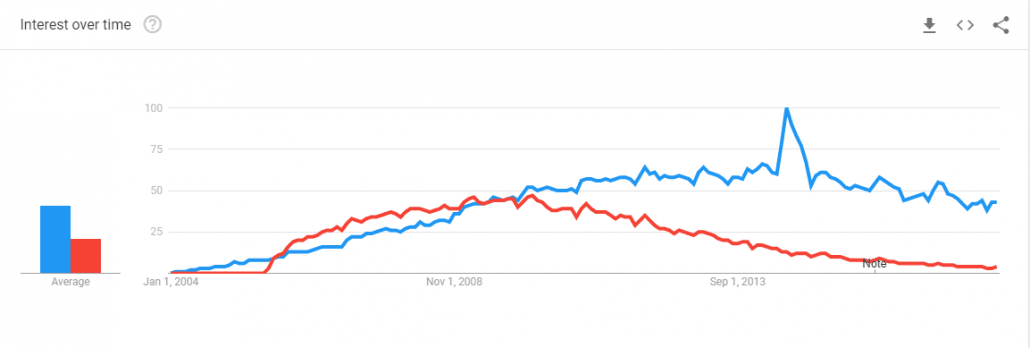
The chart shows declining interest in Joomla while WordPress remained popular. That does not mean Joomla has nothing to offer.
What are their strengths and weaknesses?
Searching online brings up conflicting arguments and reviews that can be confusing. Here is a practical comparison of the reasons to choose either platform.
WordPress advantages
- Ease of use — WordPress is generally considered straightforward to use, particularly for people without extensive development knowledge.
- Blogging features — WordPress clearly separates blog posts from pages. Joomla's approach uses one main article content type, organised through categories.
- Flexibility — A large library of themes and plugins makes it easier to find existing solutions for the features you need.
- Support — Widespread adoption makes information about WordPress easy to find.
- Economy — A large community helps you find suitable solutions quickly, saving time and money.
Joomla advantages
- User management — Joomla offers a more detailed built-in system for managing users and access.
- Custom content — Its components and modules provide flexibility for less conventional content structures.
- Multilingual support — Joomla includes multilingual features in its core, whereas WordPress commonly needs additional plugins.
- Multiple templates — Joomla lets you apply different templates to different parts of a website. WordPress generally uses one main theme, with further customisation for additional variations.
Extension libraries
At the time of the original comparison, WordPress offered more than 54,000 free plugins and 5,000 free themes.
There were also thousands of paid themes and plugins.
The article listed around 8,000 ready-made Joomla designs. It noted that there was no single official template directory, so finding a design generally required searching independently.
Security
Sucuri's Hacked Website Report for Q3 2016 recorded WordPress on 74% of the compromised websites in its sample, around 25% above its then market share of 58.9%.
Joomla accounted for 17% of compromised websites in the same report, around 132% above its then market share of 7.3%.
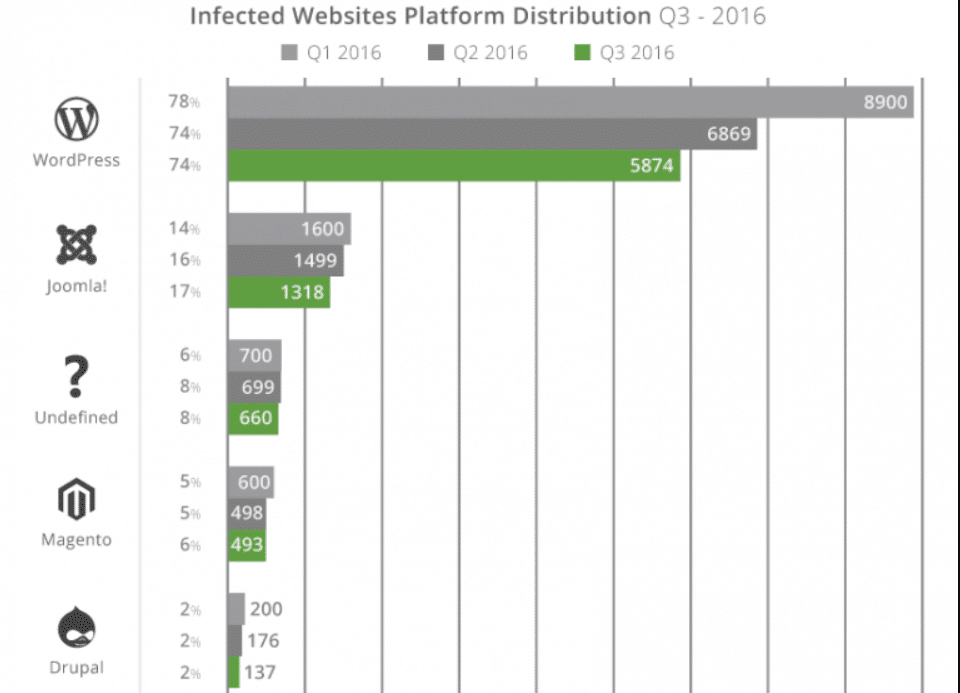
At first glance, these figures may look alarming.
However, many compromises involve poor implementation, outdated modules or unlicensed software.
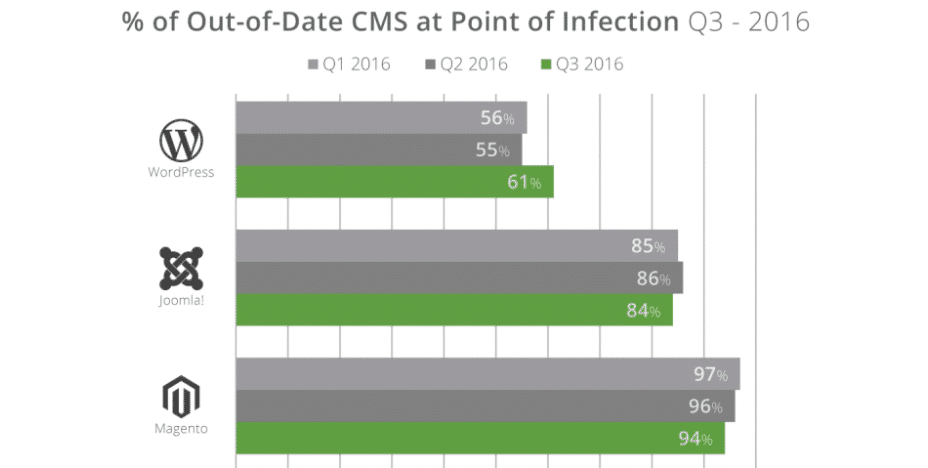
At the time of compromise, 84% of the Joomla installations and 61% of the WordPress installations in the report were out of date.
The platforms can therefore provide a reliable foundation; neglected, outdated projects create a particular risk.
Statistics offer context, but the type of project you want to build is the most important consideration.
Choose the platform that suits your task, feels comfortable to work with and, above all, that your team understands well.