TechnologyUpdated 2 min read
WebAssembly: when a website needs heavier computation
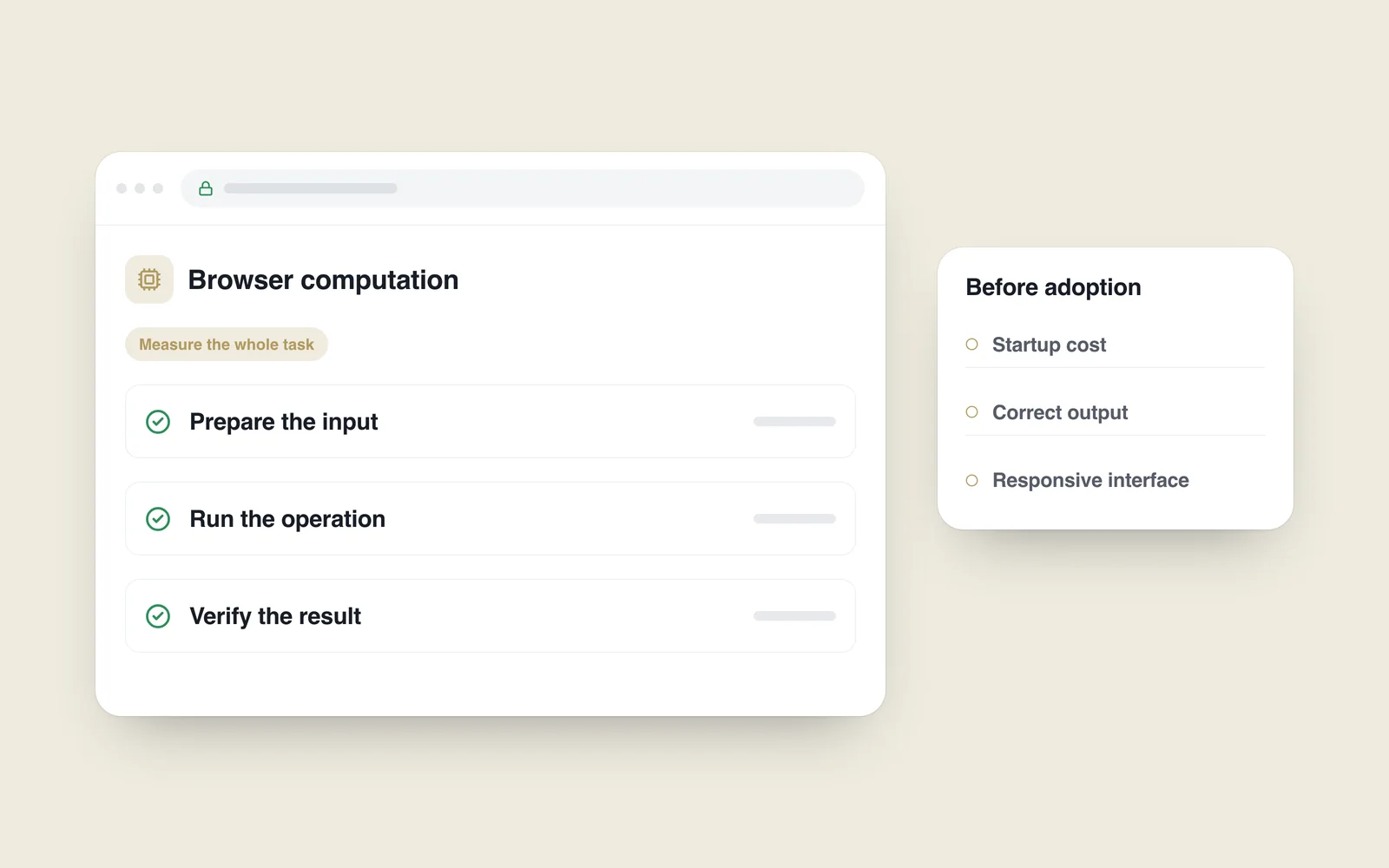
Processing a large image or calculating an engineering model differs from displaying a text page. Computation can interrupt the interface. WebAssembly may be worth assessing for that work, but novelty alone is not a reason to add it.
W3C announced WebAssembly’s standardisation in 2019. It is a low-level format designed for efficient execution, often used as a compilation target from other languages. It can perform a particular job alongside JavaScript in a web application.
Find the expensive work first
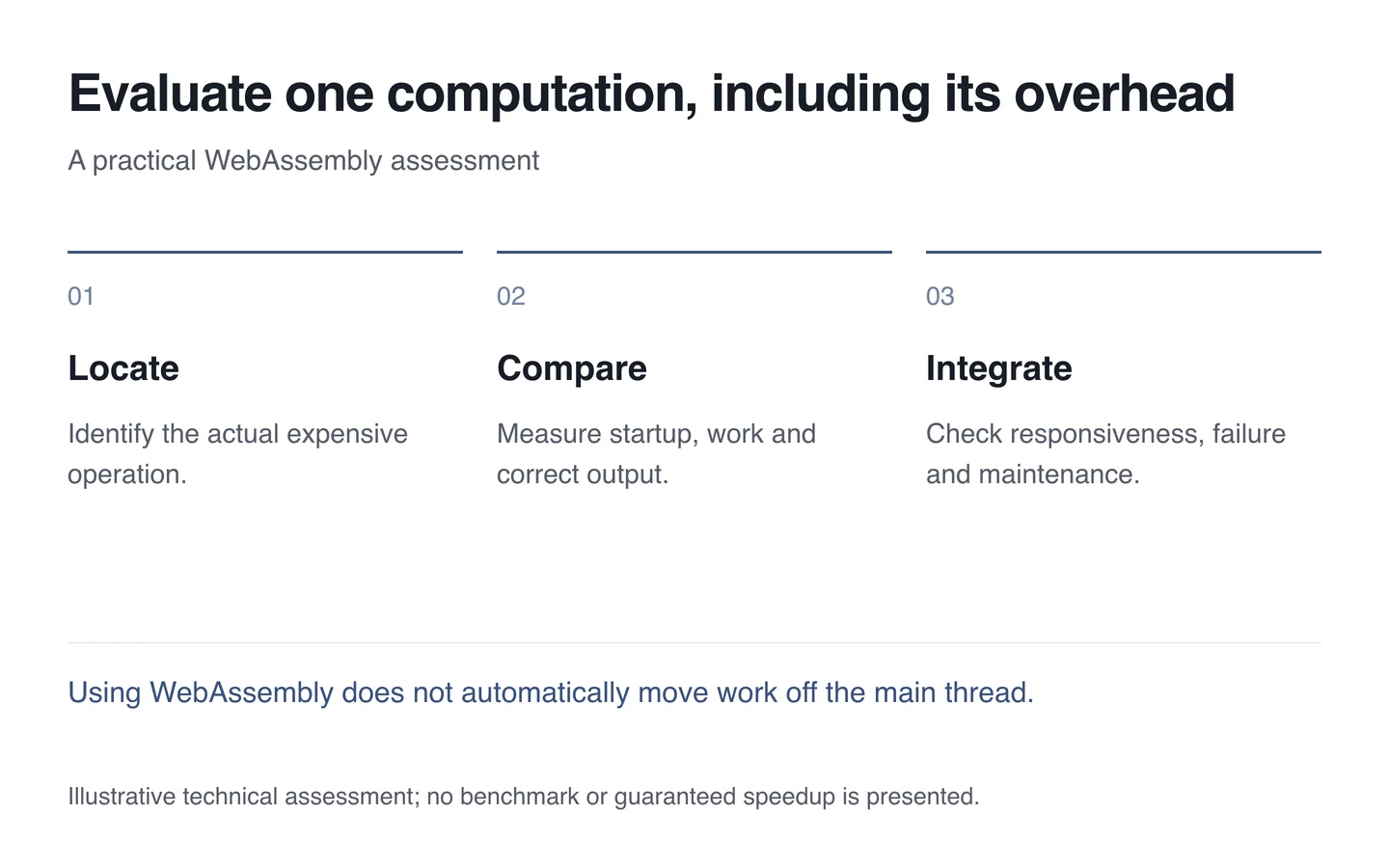
Measure whether time is spent on network responses, data conversion, computation or screen updates. Moving computation cannot reduce a large photograph’s transfer size. A simple form may only gain unnecessary module weight.
Select one bounded operation and compare it with the existing implementation. Correctness matters as much as a fast demonstration: test different inputs, exceptional cases and cancellation.

Include startup and transfer costs
Downloading, preparing the module and moving data take time. A faster short calculation may not recover that overhead. Measure first use and repeat use separately, including on a weaker phone.
Provide clear working states. Where appropriate, move lengthy work away from the main thread so other interactions can continue. That requires a separate architectural decision; WebAssembly does not automatically provide it.
Plan maintenance too
Record library sources, versions and the update route. Input validation and processing rules still matter. Execution in a browser does not establish that every incoming file or package is trustworthy.
- Identify one specific, measurable computation.
- Compare correct output and complete execution time.
- Measure startup, repetition and a weaker device.
- Test cancellation, failure and interface response.
- Assign ownership of module versions and updates.
Treat WebAssembly as a tool for a defined need when planning a web application. A good choice considers correctness, user experience and measured evidence together.