TechnologyUpdated 2 min read
HTTP/3 and QUIC: what changes in a website connection
A page requests text, pictures and scripts through a connection. Packet loss can delay delivery across requests. Image compression alone does not solve every problem at this layer; the connection protocol matters too.
RFC 9114, published in June 2022, defines HTTP/3 as HTTP over QUIC. Page semantics remain familiar while the transport changes. This is an infrastructure capability, rather than a requirement to rewrite the website.
Where the connection may help
QUIC manages parallel streams and reliable delivery at the transport layer. Recovery on one stream need not block others in the same way as loss recovery on a shared TCP connection. Shared bandwidth and congestion still matter.
Connection establishment differs too, with TLS protection integrated into QUIC. That does not establish that every website becomes faster. Location, network conditions, resources and other bottlenecks affect the outcome.

Check support along the actual path
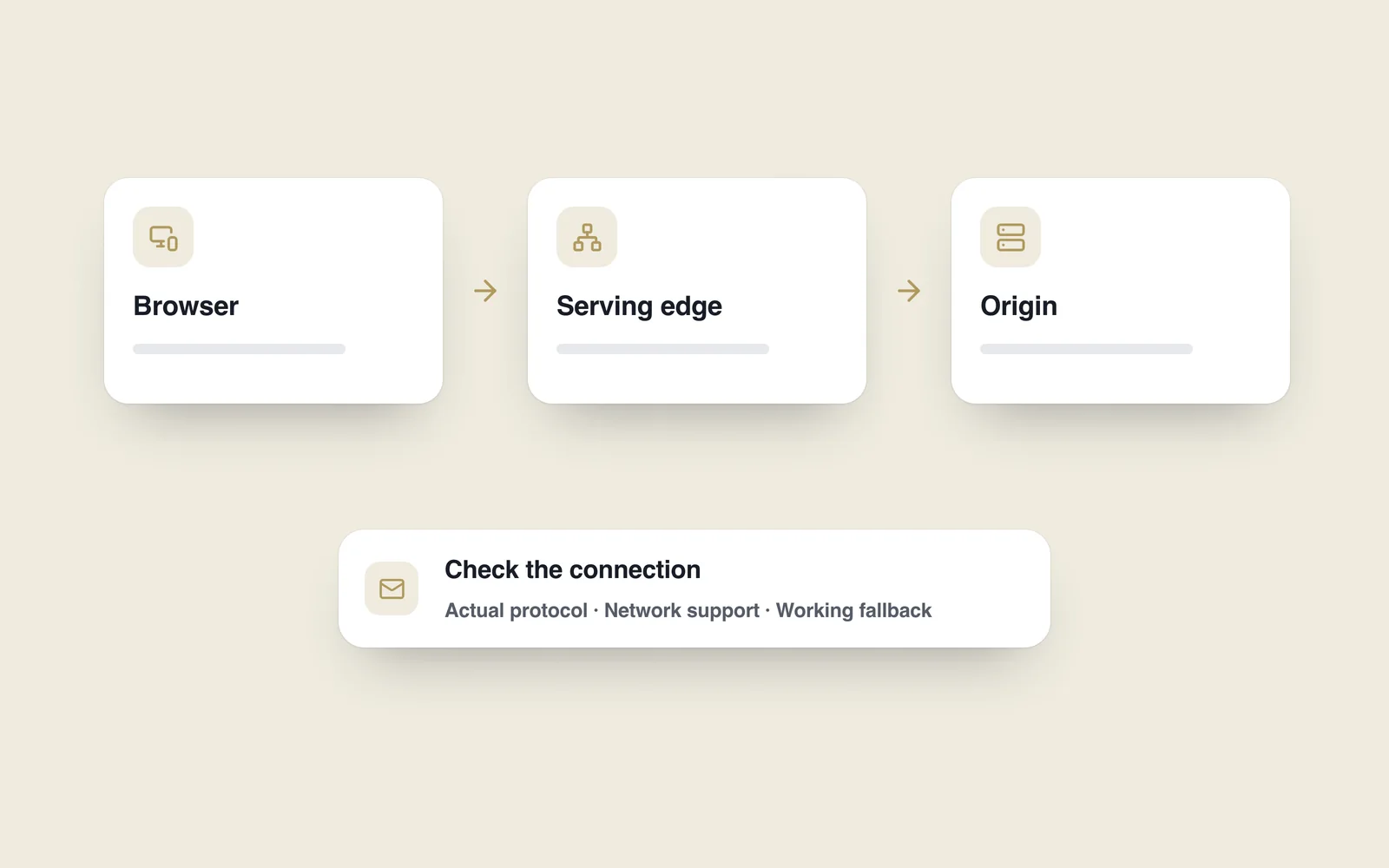
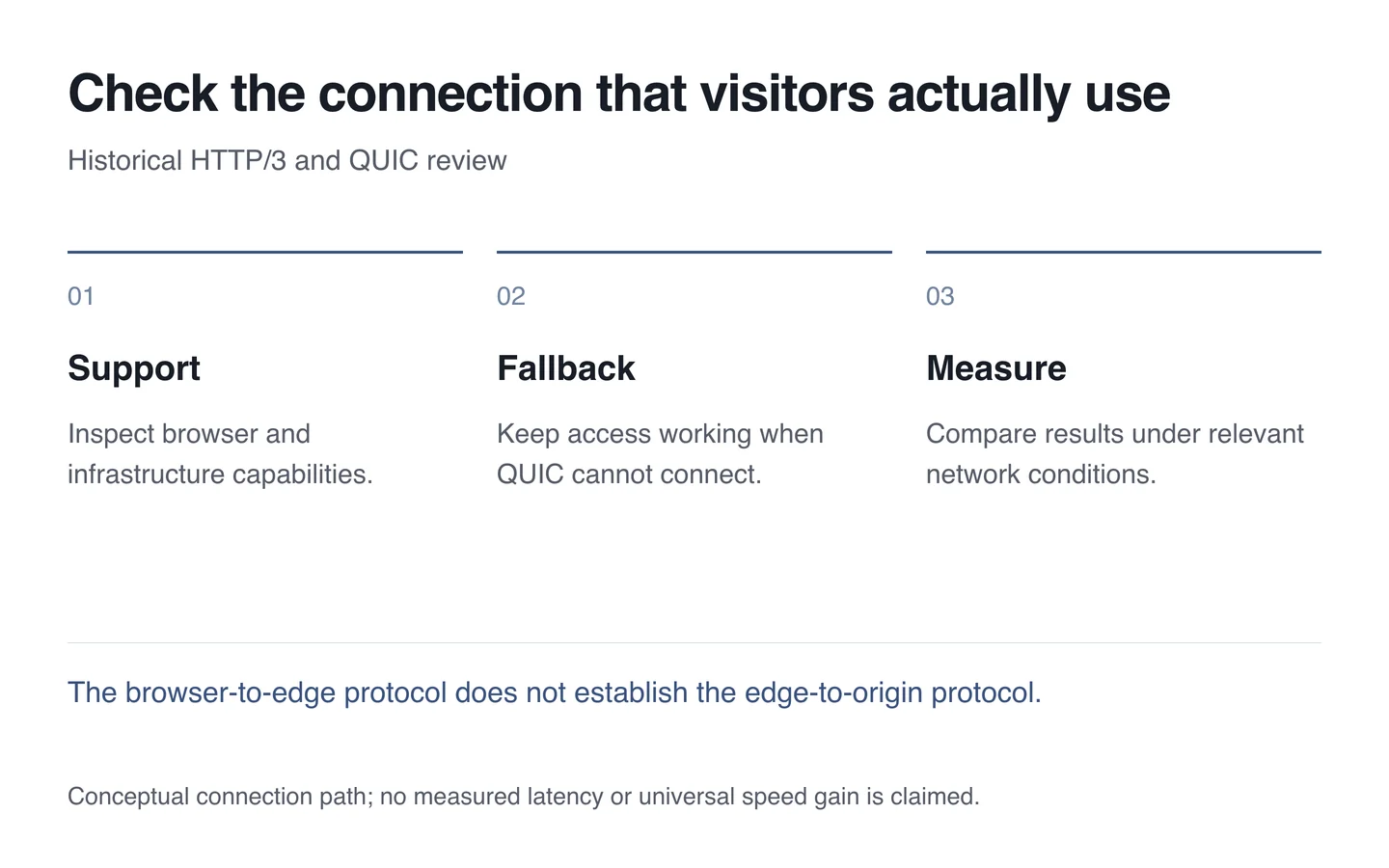
The serving infrastructure needs support as well as the browser. With a CDN, browser-to-CDN and CDN-to-origin connections may differ. HTTP/3 on the first leg does not prove it on the second.
Some networks restrict UDP, preventing a QUIC connection. The site needs a working route through another HTTP version. Inspect the protocol actually used; an enabled dashboard switch cannot establish the final visit’s behaviour.
Measure in relevant conditions
- Record baseline performance and the current protocol.
- Check browser and serving-infrastructure support.
- Try different networks and a weaker connection.
- Confirm that fallback connectivity still works.
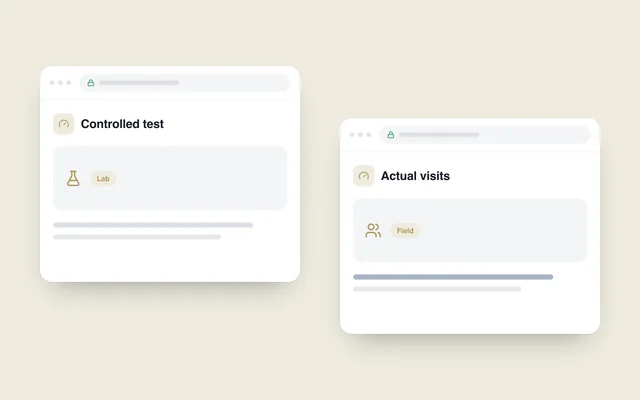
- Compare page loading and actual-visitor evidence.
During performance improvement, HTTP/3 is one layer to assess. Expensive scripts, broken forms and oversized images need their own work; a new protocol number cannot automatically repair them.