SEO3 min read
Product structured data: keep price, stock and variants consistent
The price on a product page changes, but Google still shows the previous amount. A delayed recrawl is one possibility. Another is a disagreement between the visible page, its structured data and the product feed.
Structured data describes product facts in a machine-readable form. Implementing it well means keeping those facts accurate and consistent across the places that publish them.
Separate the product from the offer
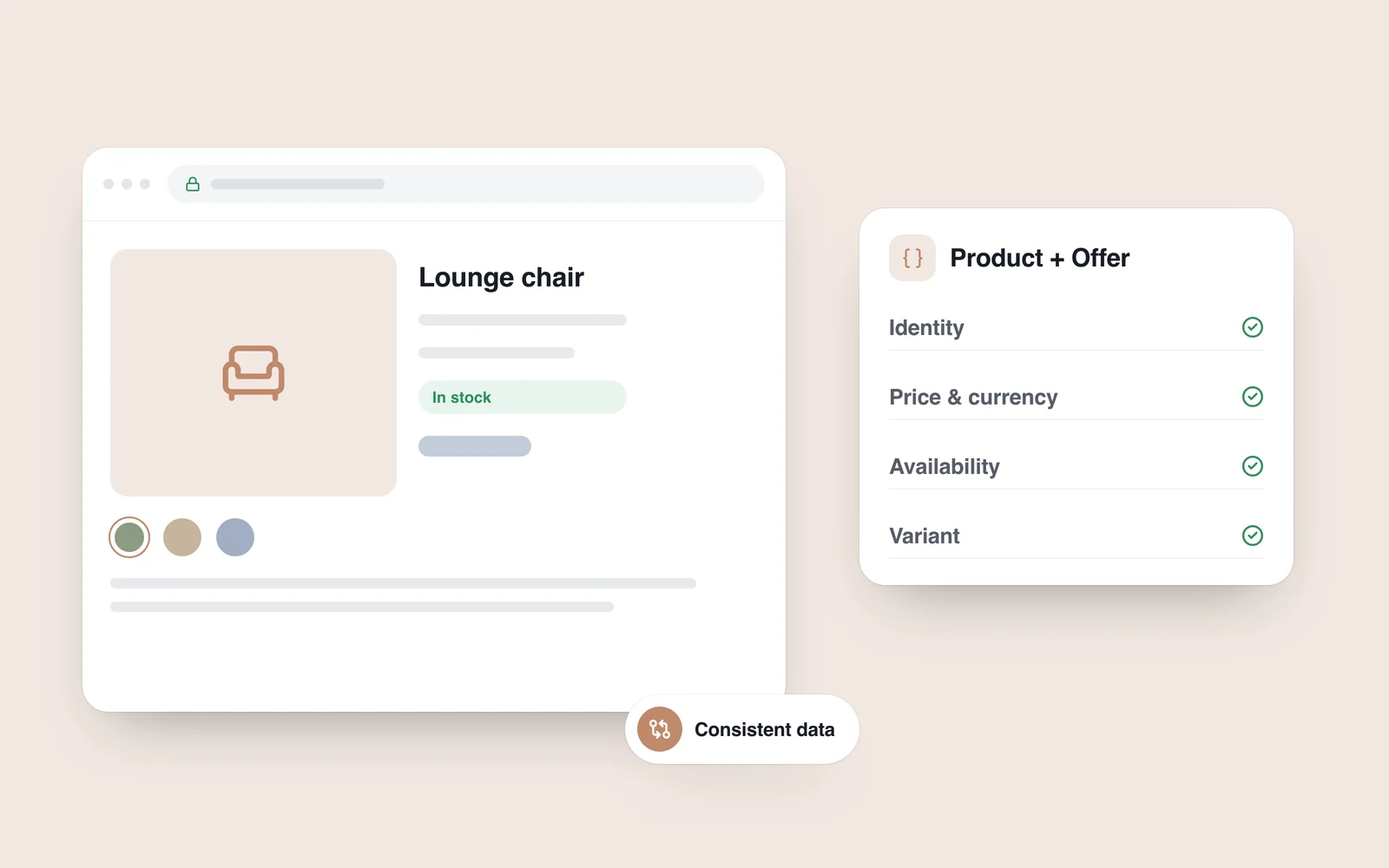
In Google’s product markup guidance, Product describes the item and Offer describes its selling offer. Relevant information can include the name, image, identifiers, price, currency and availability. Check the required and recommended fields for the particular search feature you are implementing.
Use the correct currency and a properly represented numeric price rather than copying a formatted visual label into a numeric field. Availability should match the actual purchasing conditions. An item available only on preorder should not be described as ordinary in-stock inventory.
Distinguish an individual product page from a category listing. Creating one fictional product to represent the entire catalogue does not serve the purpose of product markup.

Publish from an agreed data source
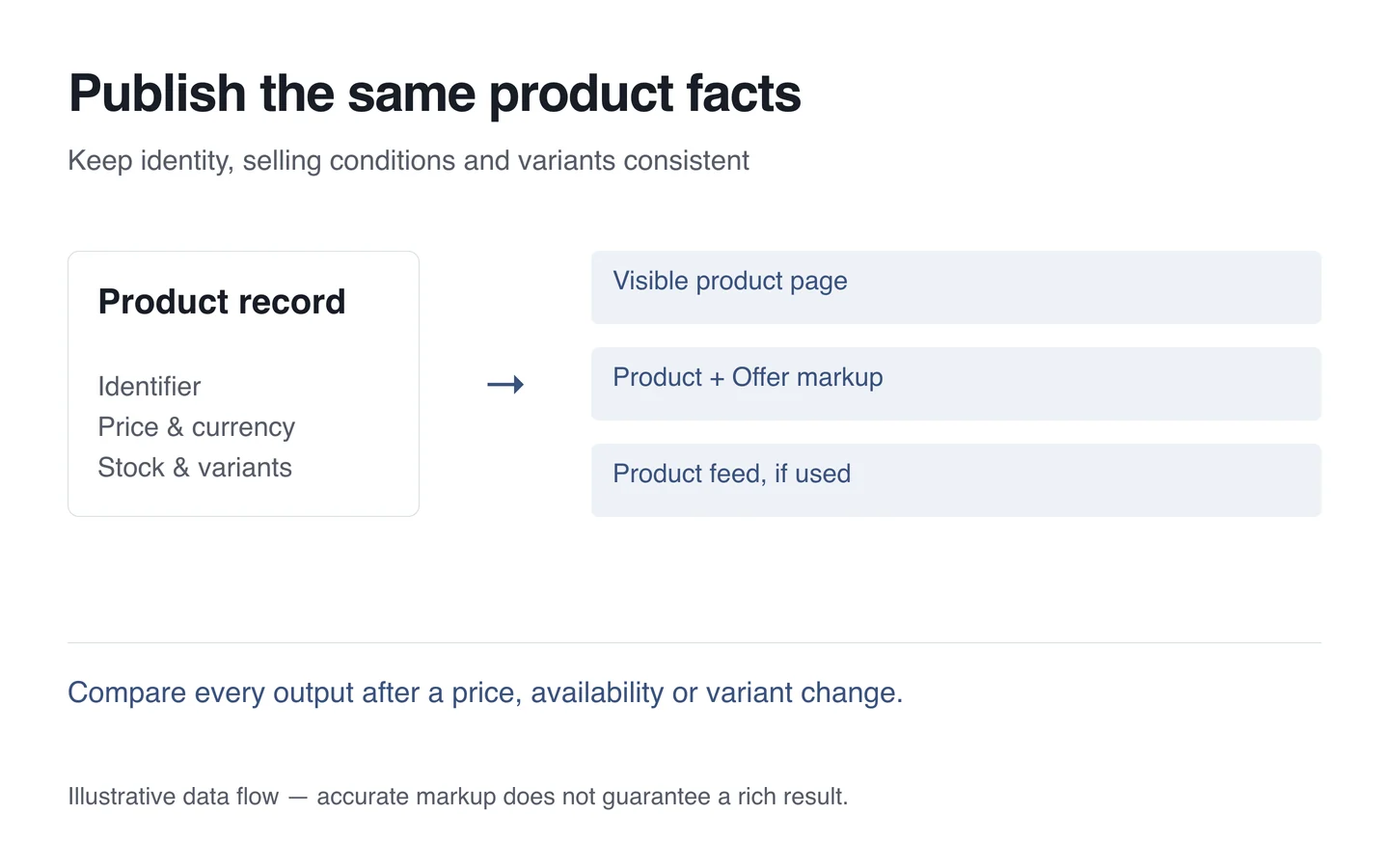
Editing a price manually in three places invites divergence. Generate the visible page, JSON-LD and feed from agreed product records where possible. You still need to account for different update schedules and caches.
- Identity: connected systems should consistently identify the same item.
- Price: compare regular and sale amounts, currency and applicable conditions.
- Stock: establish which system owns the final availability value and how quickly it propagates.
- URL: the destination should open the product and variant being described.
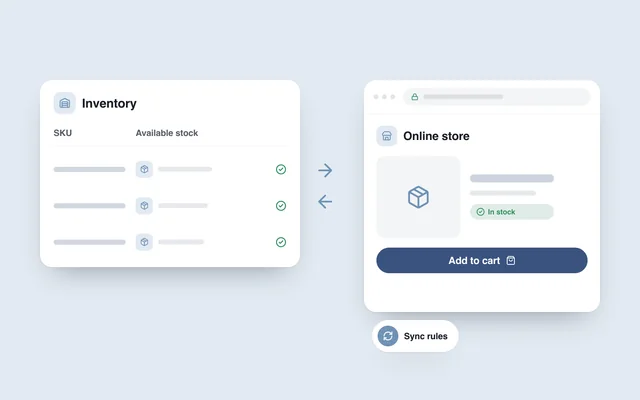
If the store connects to an ERP, include markup updates in the synchronisation plan. An integration is incomplete when customers and search systems receive contradictory selling conditions.
Check each size and colour
Variants of one model can have different identifiers, prices and stock levels. Google expanded product variant support in 2024: ProductGroup describes the group, with related Product records describing its variants.
Choose an implementation that fits whether variants share one page or have separate URLs. Compare each destination with the selected state on the page. The parent model’s information cannot accurately describe a particular size when that size has a different price or is sold out.
A valid result does not guarantee stars in Search
Only add ratings and review counts when genuine, relevant information supports them. Invented reviews do not become acceptable because they produce an attractive preview. Under Google’s structured data policies, markup must represent the page’s main content; technically valid markup does not guarantee a rich result.
Adding JSON-LD should therefore not become a ranking promise. Other factors affect search presentation and visibility. Passing a validator proves one technical check, not the accuracy of the selling conditions or a decision Google will make.
Repeat the checks after changes
- Select examples of a regular offer, a sale and an out-of-stock item.
- Compare the visible page, markup and any product feed in use.
- Test different variants and direct entry to their relevant URLs.
- Run Rich Results Test and review the appropriate Search Console reports when available.
- Change a test product’s price or stock and confirm that every relevant output updates.
This part of technical SEO depends on product data management and continued checking. Accurate descriptions are the foundation of the additional context supplied to search systems.