SEO3 min read
Local SEO: connect your Business Profile and website
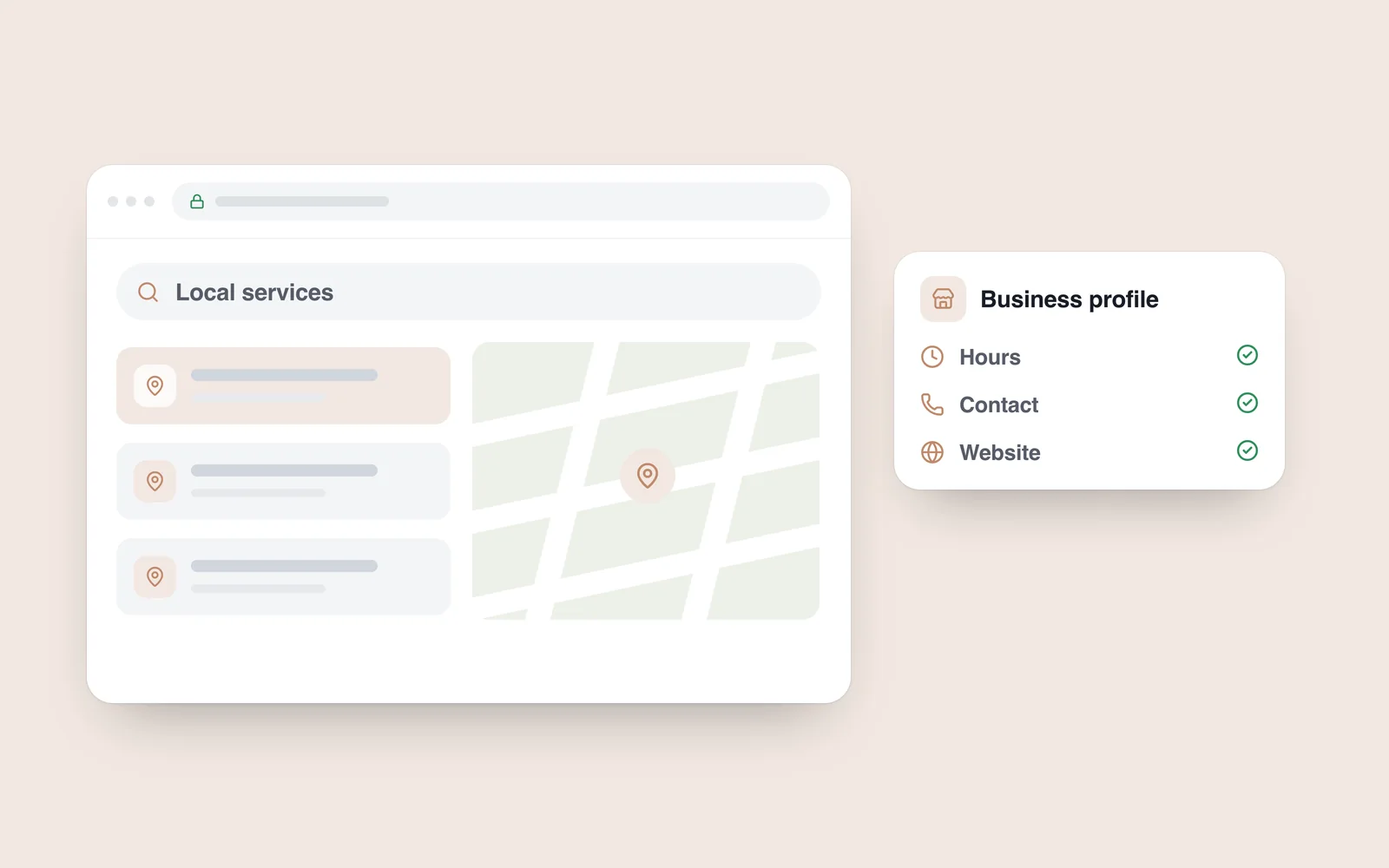
A customer searches for a nearby repair workshop. Several options appear on the map, but one has no opening hours, another has a disconnected number, and a third makes its address difficult to find on the website. Ordinary missing details can make a decision unnecessarily difficult.
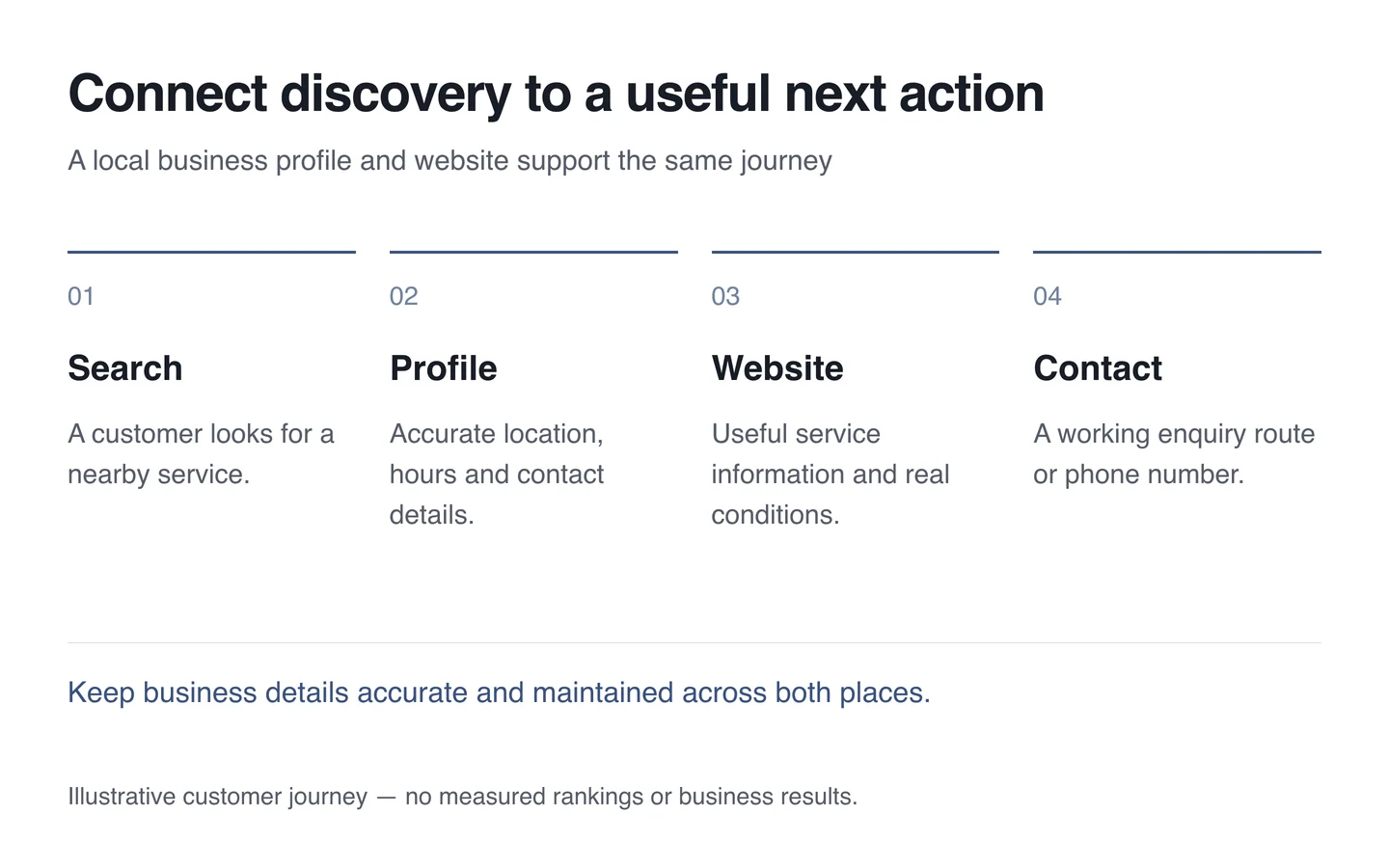
Local SEO starts with helping people understand what you do, where you operate and how to reach you. A Google Business Profile and a website should support each other. Completing either one does not guarantee the first position.
Give the profile and website complementary jobs
Google Business Profile is one way to present business information in Search and Maps. Your website provides space for service detail, work examples, conditions and an enquiry route.
First check whether the business meets the eligibility requirements. A business operating only online and one visiting customers in person are different cases. The address or service area should reflect how the business actually operates.
Google's representation guidelines centre on a real business name and accurate information. Adding cities or services to a name when they are not part of the brand is not a sound starting point.

Check the details customers rely on
- Name and category: make it clear which business this is and what it offers.
- Address or service area: describe the real location and operating area.
- Phone and website: links should open the appropriate page and the number should work.
- Hours: include days off and temporary changes.
- Photographs: an actual entrance, premises or work example can help people orient themselves.
Present the corresponding information clearly on the website. Make the phone number tappable and provide arrival instructions where useful. Keep the details of different branches distinct.
Understand why local results vary
Google's explanation identifies relevance, distance and prominence as the main local ranking factors. Those factors mean people will not necessarily see the same order of results. Searching from another neighbourhood or city may produce a different view.
A single search from your own device is therefore a weak assessment of the whole project. Check whether people find the correct branch, reach the service information and successfully make contact. Observe useful actions alongside search position.
Make local website content specific
A service page should answer practical questions: what you do, whom you serve, where you work and how an enquiry begins. Repeating a city name cannot replace those answers.
A branch page should have a real purpose, with its own address, hours, contact information and relevant local conditions. Creating dozens of near-identical city pages simply to increase the count is not a useful content plan.
Use photographs and work examples only where you have permission and reliable details. Inventing a customer story or result is not a way to build trust.
Maintain information and handle feedback responsibly
You can invite real customers to share their experience and respond to questions. Do not buy reviews or manufacture activity. Keep personal information and confidential order details out of public replies.
Assign someone to maintain the profile after setup. Update the website when the number, address or opening hours change. Stale information is especially unhelpful when a person is already trying to visit or call.
A practical starting checklist
- Check eligibility and access to manage the profile.
- Compare the name, phone, address and hours with the website.
- Complete the journey from search to contact on a phone.
- Improve service information and branch details.
- Assign responsibility for updates and customer questions.
Local SEO work should begin with the business, its audience and its actual information. The aim is to help the right person find accurate details and contact you.