SEO4 min read
INP: why a fast-loading website can still feel slow
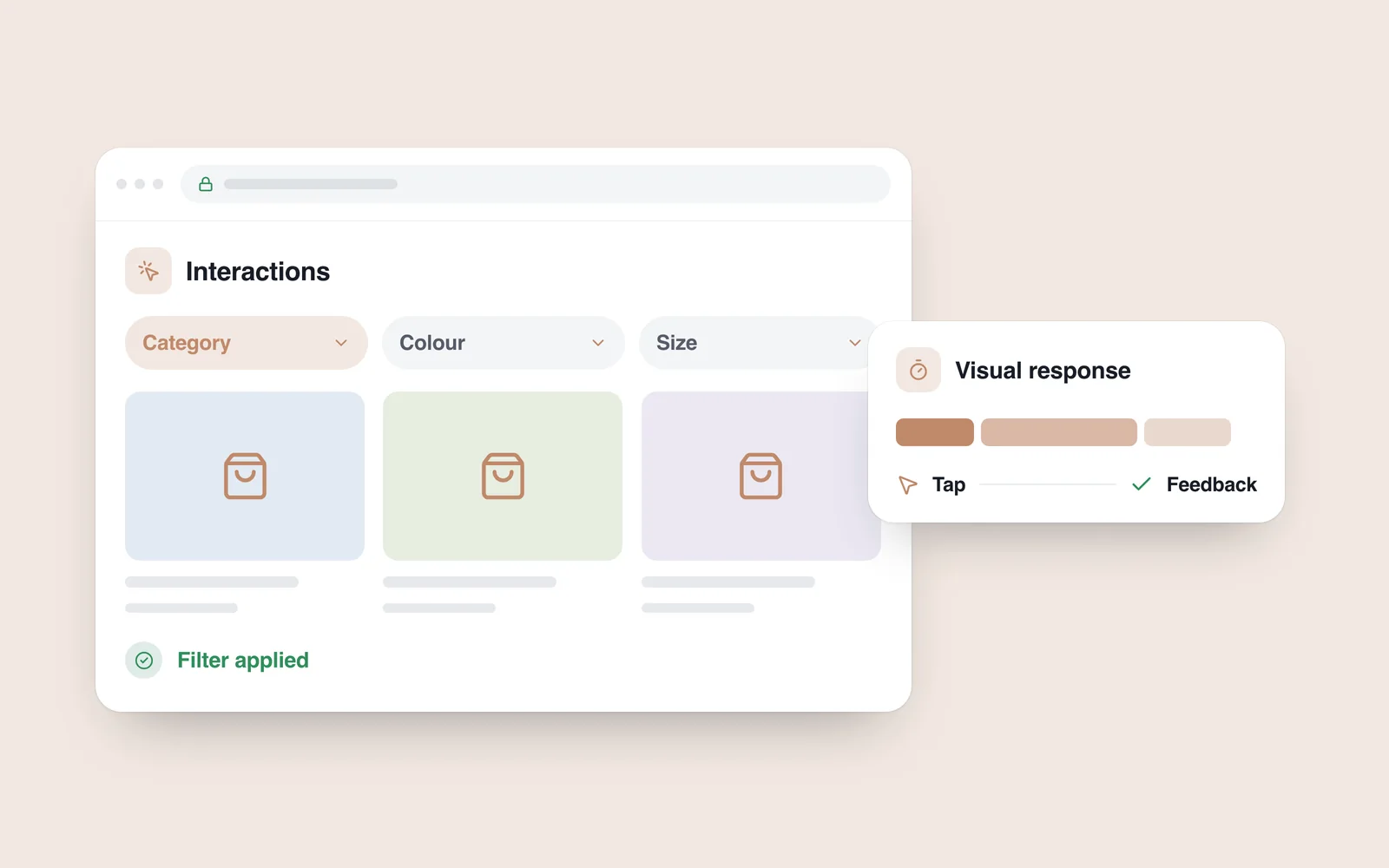
The page opens quickly, but tapping a product filter seems to do nothing. A visitor taps again; the menu eventually appears, and it is unclear which action the site accepted. A fast initial load does not, by itself, prevent this kind of delay.
INP assesses how promptly a page gives visual feedback after an interaction. It replaced FID in Core Web Vitals on 12 March 2024. For site owners, this is a useful reason to check filters, menus and forms alongside loading speed.
What INP measures
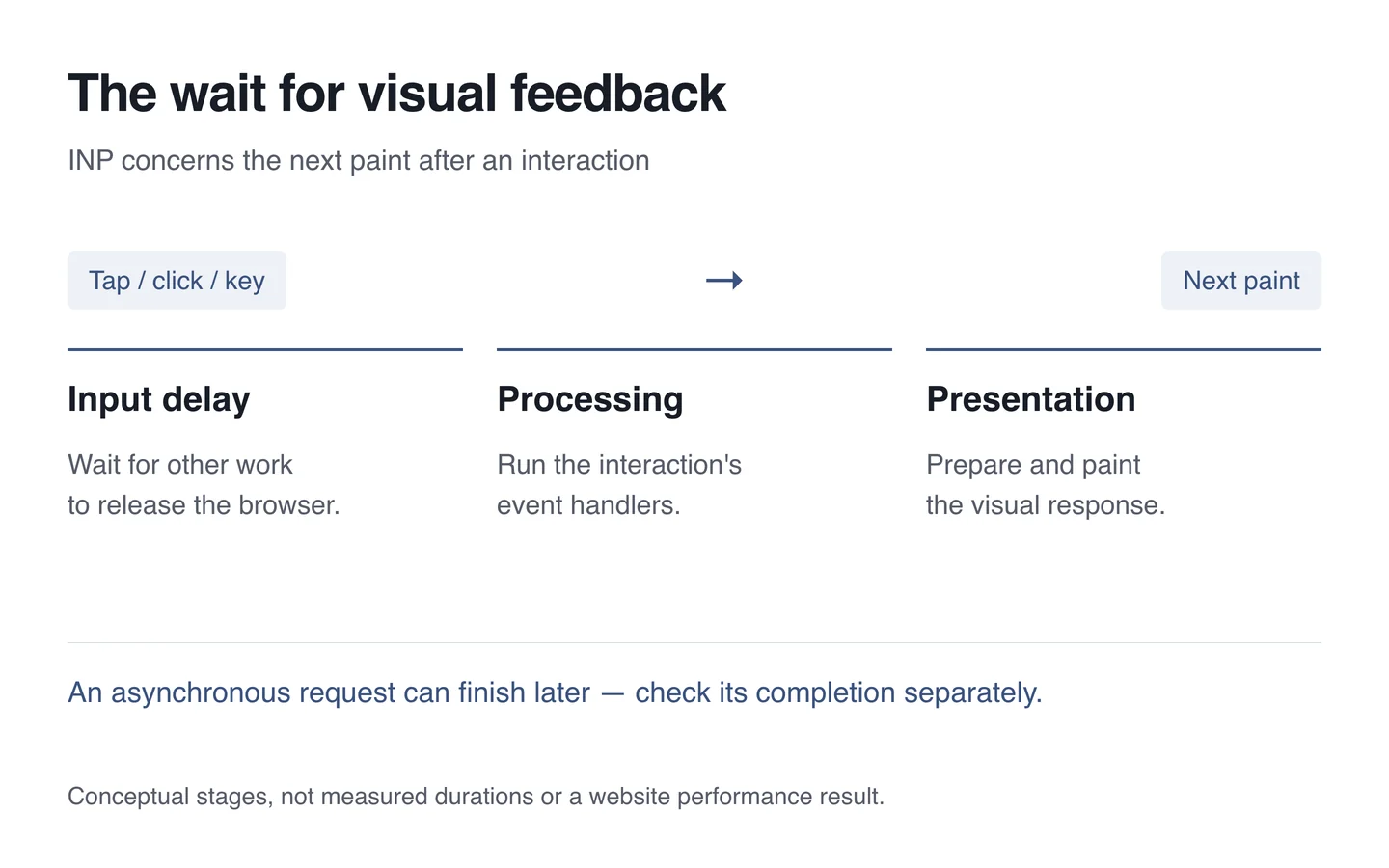
The official Chrome announcement confirms INP's place among the Core Web Vitals. It concerns clicks, taps and keyboard interactions, from the start of the action to the browser's next visual update.
When someone chooses a filter, for example, its state should change promptly and indicate that the request is being handled. Fetching the products from a server may take longer. INP does not measure that entire network operation; it assesses how long the next visual response is blocked.
Fast loading, prompt feedback and a search that finishes quickly are different outcomes. People benefit from all three, but investigating them requires different measurements.

Read the assessment in context
The INP reference defines good responsiveness as 200 milliseconds or less, above 200 through 500 as needing improvement, and above 500 as poor. The overall assessment uses the 75th percentile of visits, with mobile and desktop considered separately. One quick click cannot establish that a whole site responds well.
If PageSpeed Insights has no real-user data for a page, that is not a passing result. A smaller site may lack a sufficient sample. Test specific interactions in the browser and, where appropriate, collect real-user measurements.
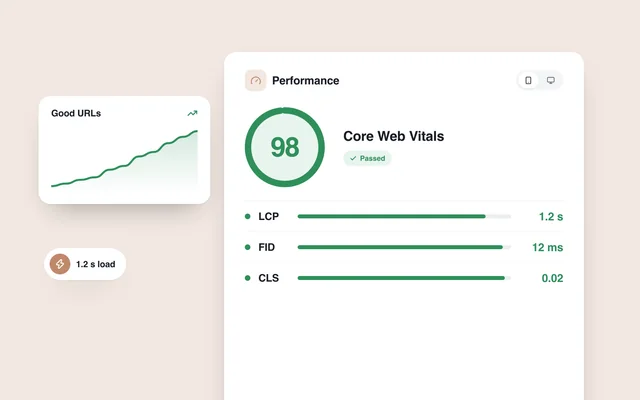
A Lighthouse performance score and INP are not the same measure. A score of 100 is welcome, but it does not establish that every menu or filter used later in a visit will respond promptly.
Find the interaction that stalls
Delays often appear when the browser is busy: a large script is executing, a long list is being recalculated or many elements need layout updates. The user's action waits, while the page simply appears unresponsive.
- Navigation: does the menu open promptly, including during the first seconds after arrival?
- Catalogue: what happens when someone changes a filter or types into search?
- Form: does the button show progress and handle errors clearly?
- External scripts: are chat, analytics or other additions contributing to the delay?
Repeat the tasks on an ordinary phone. A powerful development computer can hide problems that are obvious on a less capable device.
Address the measured cause
A developer should first locate the slow interaction and identify what holds up its response. The fix may involve breaking work into smaller tasks, reducing unnecessary code, simplifying a large list update or loading an external script at a more appropriate time. Match the change to the cause.
A progress indicator helps someone understand the process, but does not replace optimisation of heavy work. Disabling every animation is not the starting point either: first establish whether animation is involved. Verify the improvement while keeping the feature usable.
How this relates to SEO
Google Search Central's explanation explicitly says that good Core Web Vitals do not guarantee high rankings. Content and relevance to the searcher's need remain important. The practical purpose of improving INP is a website that people can use reliably and promptly.
Include real interactions in a technical SEO assessment. A screenshot of the first screen cannot show how well a page behaves once someone starts using it.
A useful testing sequence
- Review the real-user assessment where enough data is available.
- Choose three important tasks: navigation, search or filtering, and a form.
- Repeat them on mobile and capture a slow example.
- Measure its cause, make a targeted change and repeat the same task.
- Check separately that loading, layout stability and functionality have not deteriorated.
If customers report delayed responses, send us the page and the action involved. A reproducible example is a much stronger starting point than a single overall score.