SEOUpdated 2 min read
Filter URLs and Google: choose what should be indexed
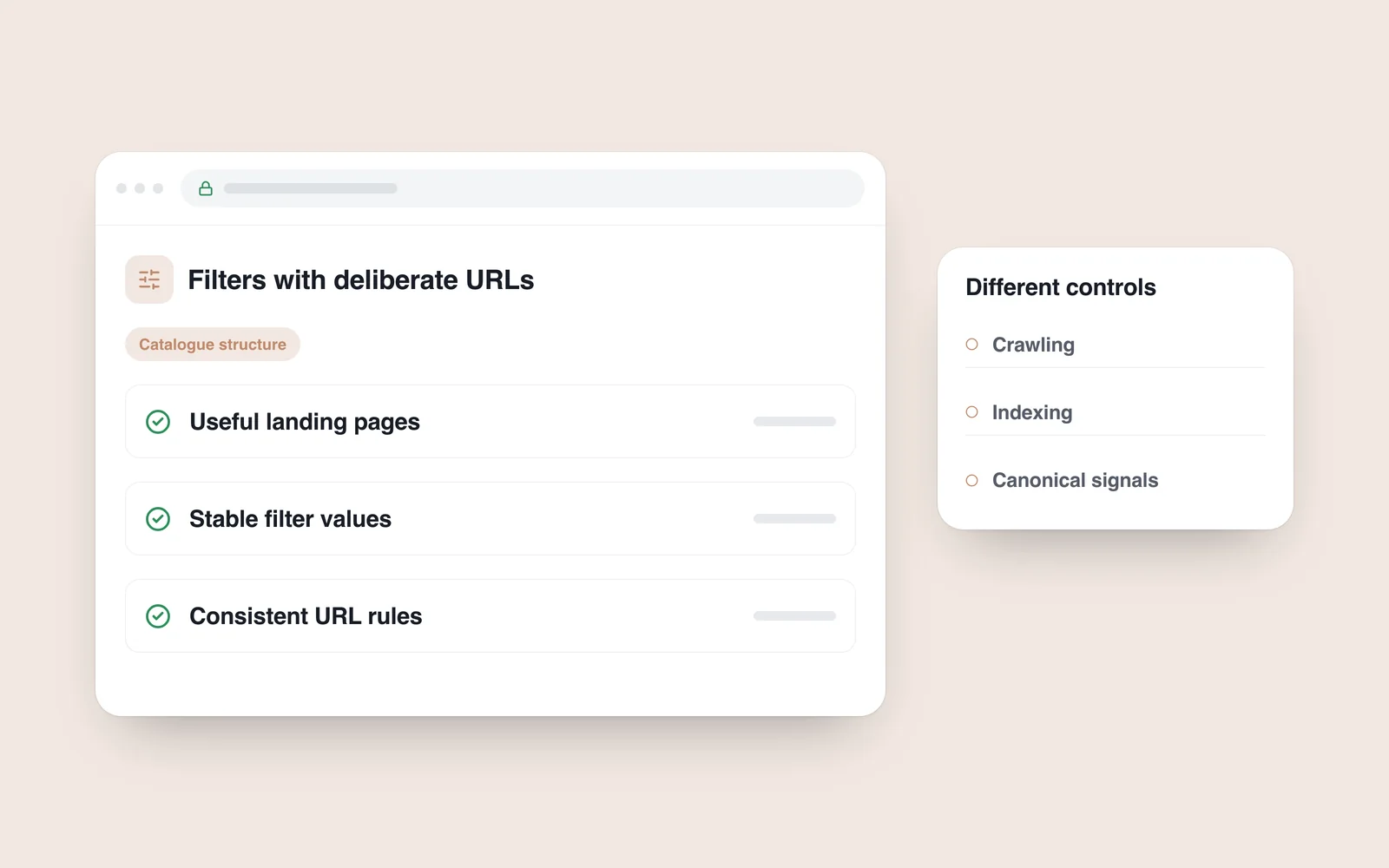
A category offers colours, sizes, price ranges and sorting options. Every selection creates another address. Filters help people, yet one catalogue can expose thousands of near-duplicate combinations to search engines.
Indexing every combination is not the objective. Decide which selections deserve a useful independent landing page and which represent temporary browsing state. A different sort order usually does not create a new search topic.
Select valuable landing pages deliberately
Google’s December 2024 explanation discusses excessive faceted URLs and their crawling cost. Numerous variations can delay discovery of important pages. This is not an automatic penalty claim.
An independent page needs a clear purpose, stable selection and suitable content. A meaningful subset of a popular category may be useful; an arbitrary price-and-sort combination may not. Base the decision on customer needs and the actual catalogue.

Separate crawling from indexing
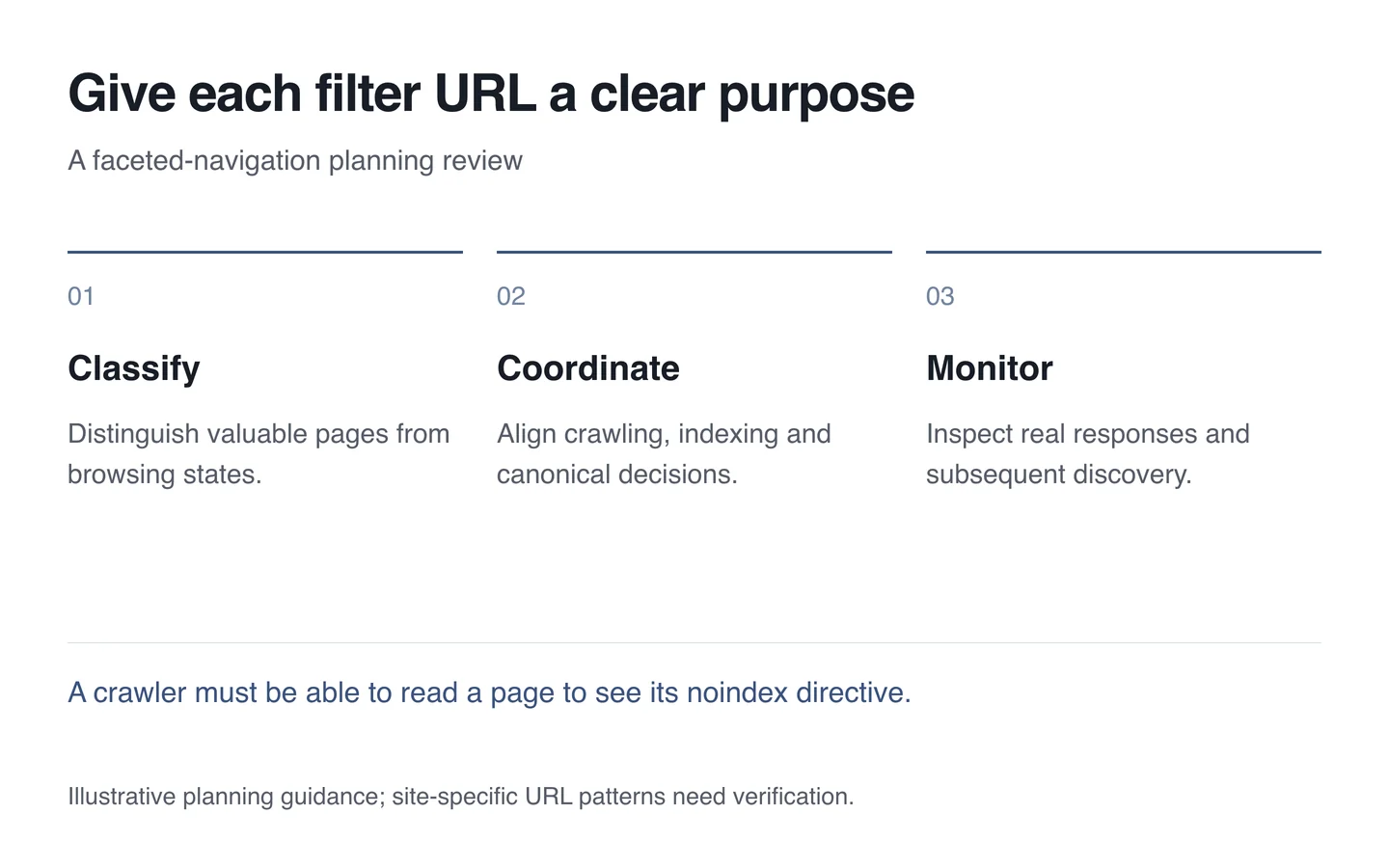
Robots.txt controls crawling. A noindex directive addresses indexing and must be read to take effect. Google’s noindex guide explains that a robots-blocked page prevents the crawler from seeing that directive.
A canonical URL is a preferred-version signal, rather than an immediate crawl prohibition. Avoid combining conflicting instructions accidentally. Previously indexed addresses can require a different transition from undiscovered combinations.
Preserve the browsing experience
Coordinate URL rules with sharing, back navigation and restored selections. Keep parameter ordering and equivalent values consistent. Define impossible combinations and avoid creating an endless network of useless links.
- Inventory filters, sorting and possible combinations.
- Select pages with independent search value.
- Agree a management rule for other addresses.
- Inspect actual responses, metadata and internal links.
- Monitor crawling and indexing after changes.
Catalogue SEO needs representative URL checks and follow-up observation. Preserve useful customer filtering while offering search engines a deliberate structure rather than uncontrolled technical copies.