SEO6 min read
AI search in 2026: a practical website readiness guide
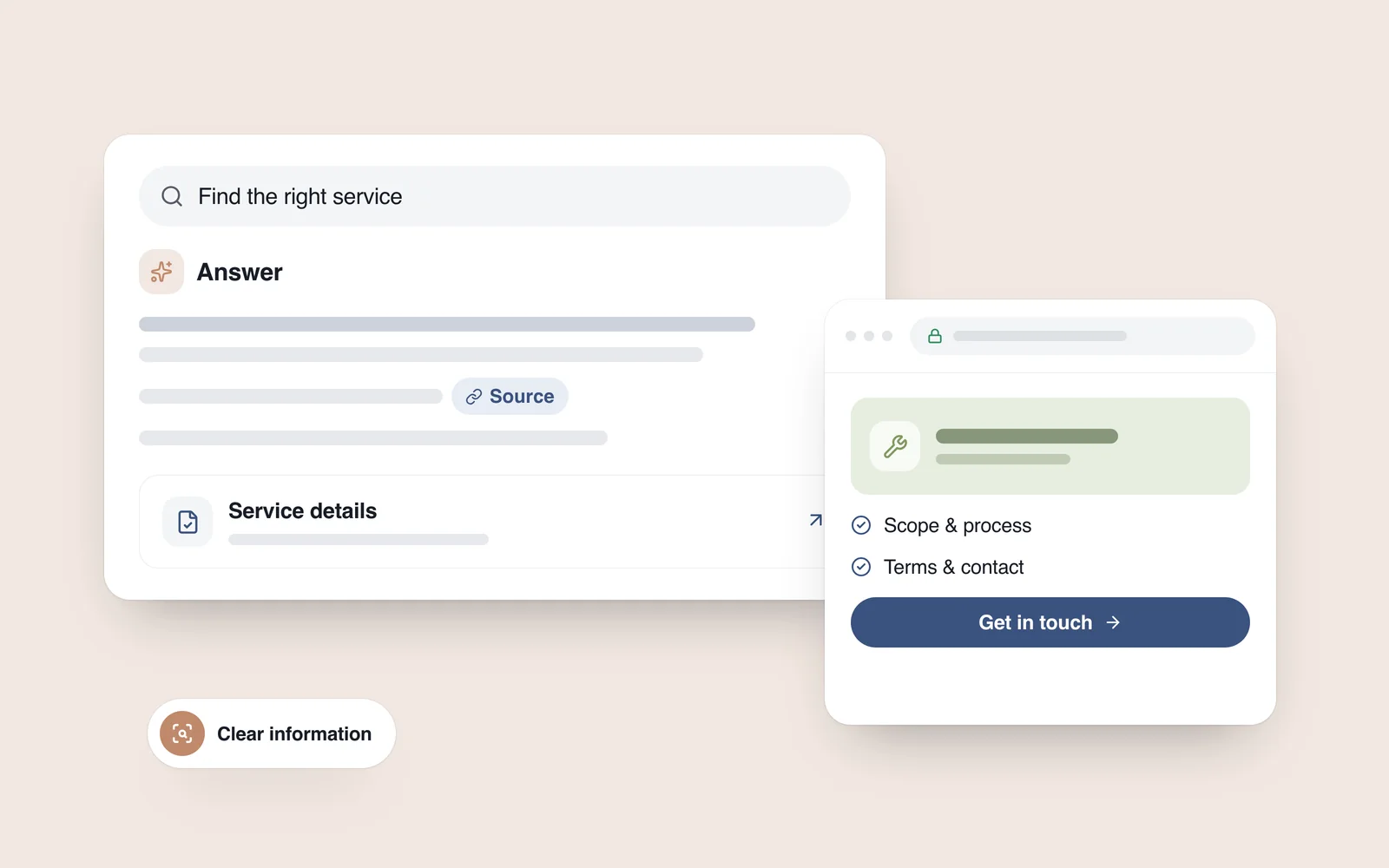
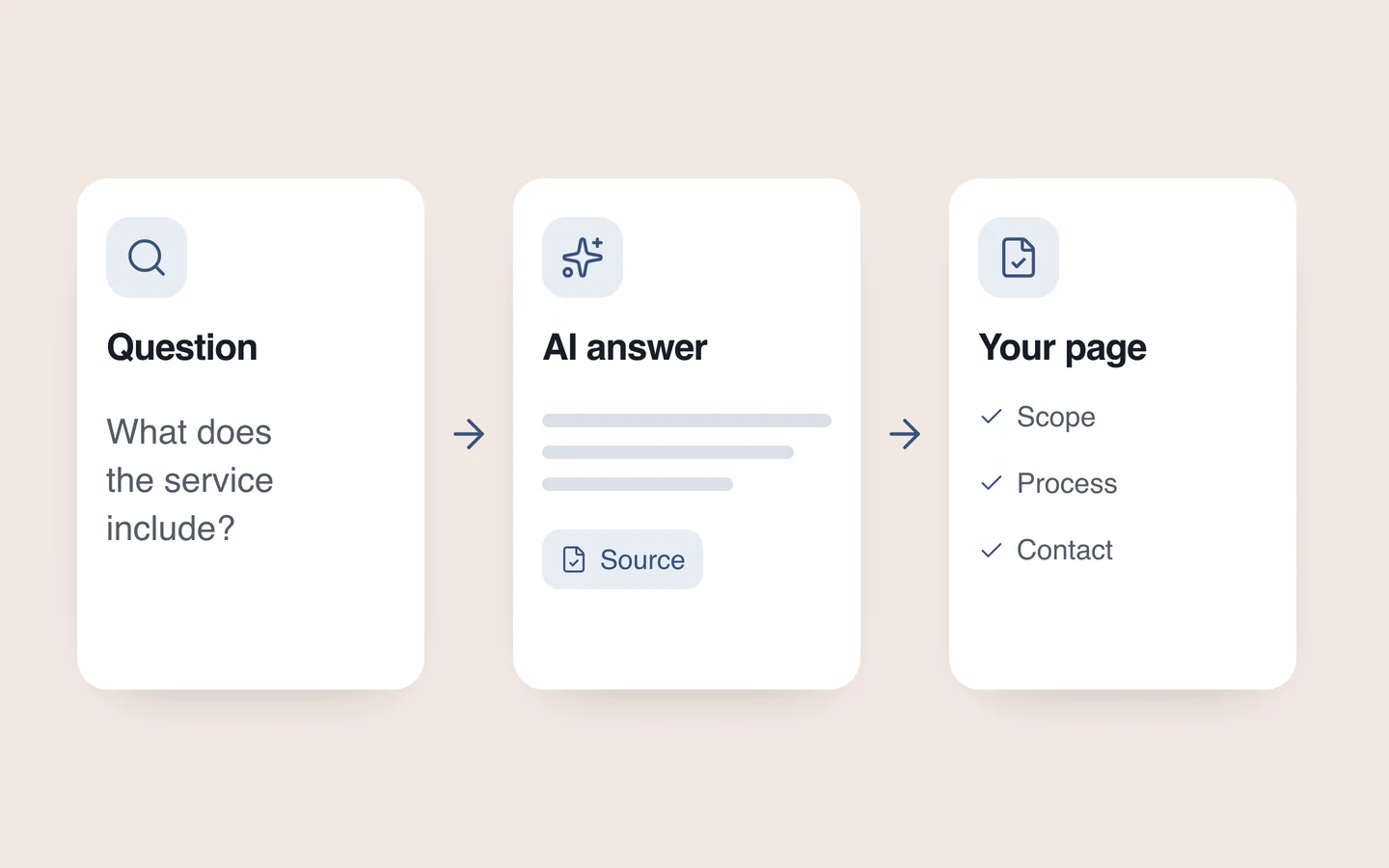
A buyer asks a search engine: “Where can I get a used car inspected before buying it, and what should the inspection cover?” A list of garages leaves several decisions unresolved. The buyer still needs to understand the checks, the booking process and the report they will receive.
AI search can assemble an answer from several web pages and link to the sources behind it. For a business, this creates a practical test: does your website contain enough reliable detail to support a useful answer, and does it help someone act when they arrive?
Why this matters in October 2026
In its 15 October announcement, Google described more prominent inline source links in AI Mode and AI Overviews. It is also testing a dedicated area for official pages that help people complete a task or find authoritative information. Availability varies across markets, languages and queries; an announcement does not mean every searcher will see the same interface.
Our recommendation is to review the pages where a customer makes a decision: services, products and contact details. A citation is an invitation to visit. The destination page needs to deliver the information that made the link worth following.
Establish whether search engines can access the page
Google's technical guidance says a supporting page must be indexed and eligible to appear in Search with a snippet. Meeting those conditions makes a page eligible; it does not guarantee selection for an AI answer.
Ask your developer to inspect the homepage and one representative URL from each important page type: service, product, category, article and contact. Start with four checks:
- Access: Does the URL load successfully? Can the search crawler get past your hosting and security rules?
- Indexing: Has a public page inherited an accidental
noindexdirective? Does itscanonicalidentify the intended URL? - Readable information: Are the description, pricing and conditions available as text, rather than embedded only in an image?
- Discovery: Can a visitor reach the page through ordinary links from the rest of the website?
Also review Settings → Search generative AI in Search Console. Google's current default allows inclusion, but a property's choice can be changed or inherited from a parent property. Check the effective setting rather than assuming a new submission is required. This control concerns participation in AI features; it is a separate check from ordinary indexing.
Give buyers the details they need to choose
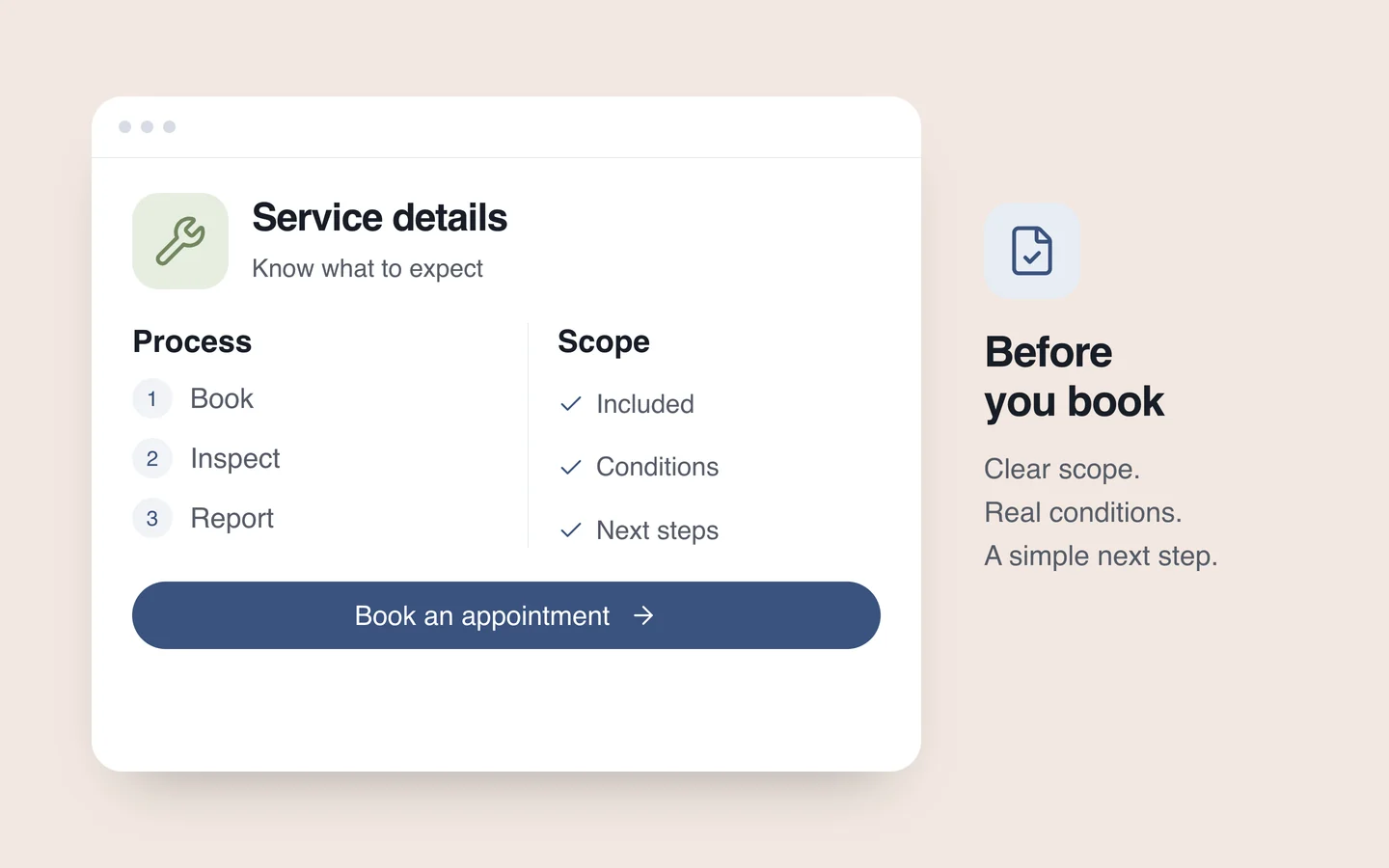
Consider the inspection service again. A headline promising “quality service” tells a buyer very little about the appointment. A useful service page answers the questions a customer would otherwise need to ask on the phone:
- Which components and systems are inspected, and what falls outside the service?
- Is an appointment required, and what should the customer bring?
- How long does the work usually take, and what can change that?
- How is the price determined, including any additional charges?
- Will the customer receive a written report and an explanation of the findings?
This is a hypothetical example, not a description of a client's offer. Apply the same exercise to a clinic, training provider or B2B supplier: publish the commitments your team can actually meet. When you cannot quote a fixed price, explain the information needed to prepare an estimate.
Original photographs, a clearly described process and a documented project give a reader something concrete to assess. Publish client names, outcomes and testimonials only when you can substantiate them and have permission. Our earlier guide to preparing and optimising content covers the editing work around a page.
Keep shop information consistent through to checkout
A product marked “in stock” is of little use if its available variants cannot be purchased. Once a visitor reaches your store, accurate operations matter as much as discovery. Walk through one product yourself: find it, select a variant, add it to the basket and check the delivery conditions.
Review the model, dimensions, variants, price, availability, delivery area and returns policy. Any structured data should describe the information customers can see on the page. Businesses serving Georgia should check which merchant tools support their market and what participation requires before planning an integration.
Turn that review into specific work: synchronise the stock source, handle unavailable variants properly, clarify the conditions and complete an order on a phone. These decisions belong in the same discussion as building and maintaining an online store.
Treat each language as a complete customer experience
A bilingual website needs complete service details, conditions and contact options in both versions. Someone reading Georgian should not have to switch to English to find delivery information. Switching languages should take them to the equivalent page, with their task still intact.
The wording can serve different audiences without changing the facts. A Georgian customer may need familiar local payment and delivery terms; an international client may need clarity about remote collaboration, time zones and the language used for project communication. Write each version for its reader, then verify that the underlying offer agrees.
Spend carefully on AI search promises
Google's official optimisation guide says its Search features do not require a special llms.txt file or artificially fragmented content. Other systems may use such a file, but Google ignores it when determining visibility and rankings in Search.
We would prioritise missing buying information, outdated details and a working enquiry journey before buying a package of AI search tactics. Publishing many lightly reworded versions of the same advice gives customers little extra value. Treat any agency promise of guaranteed inclusion in AI answers with caution.
Measure visibility, visits and business outcomes separately
Google announced dedicated Search Generative AI reports in June 2026 and says the worldwide rollout was completed by the end of August. They show impressions across AI features, broken down by page, country, device and date. The report documentation explains that properties with insufficient impressions may not see the report yet.
Bing's Topics Portfolio, announced on 13 October, groups AI Performance visibility into themes. It remains a beta, requires sufficient activity and uses approximate measures. Use it to inform content planning; citation data cannot tell you how many sales a topic produced.
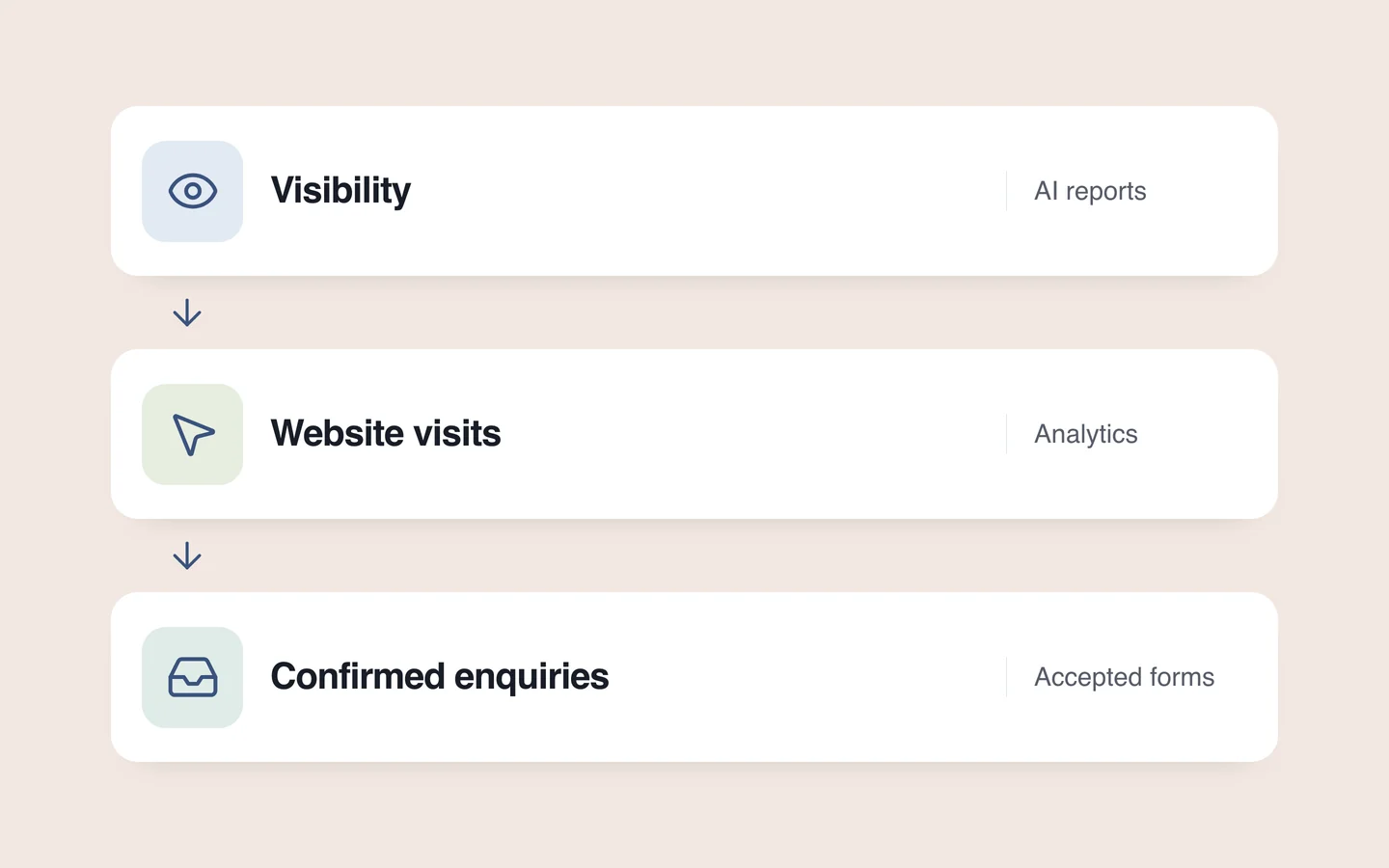
For your own reporting, distinguish where your pages appeared, how many people visited and what those visitors completed. Track received enquiries and genuine orders separately from phone-button clicks. A tap on a telephone link shows intent, not proof of a completed conversation or sale.
A focused starting point for this week
- Choose one service or product page that matters to the business.
- Verify the page’s accessibility and indexing, then check the AI setting that applies to its Search Console property.
- Collect five questions buyers regularly ask before purchasing, and add concise, accurate answers.
- Update conditions, photographs and contact details, then test the journey on a phone.
- Record the change date and review enquiries and orders alongside visibility over the following period.
Our free SEO audit can help establish an initial technical picture. An automated report helps identify issues to investigate; checking the accuracy of your offer and the customer's journey requires a separate review. For a wider programme of work, see our SEO optimisation service.